Featured in this article
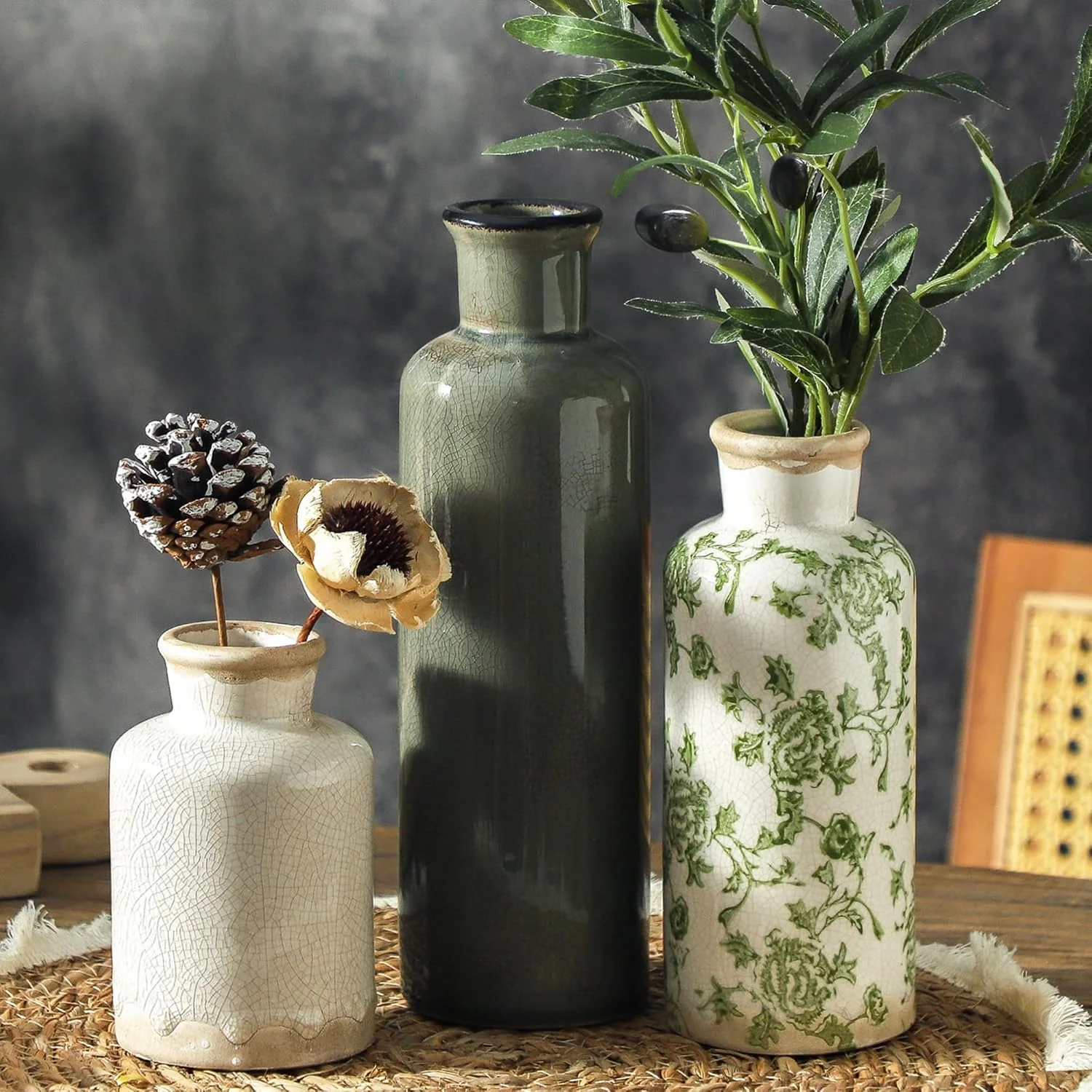
Vintage Ceramic Vase Set
Set of three green and beige vintage ceramic vases styled with dried flowers and olive branches for warm rustic farmhouse table decor.
Home Decor · Interior Inspiration · Style Guides
Vintage ceramic vase decor anchors warm neutral table styling with lived-in texture and earthy color tones that simple white porcelain lacks.
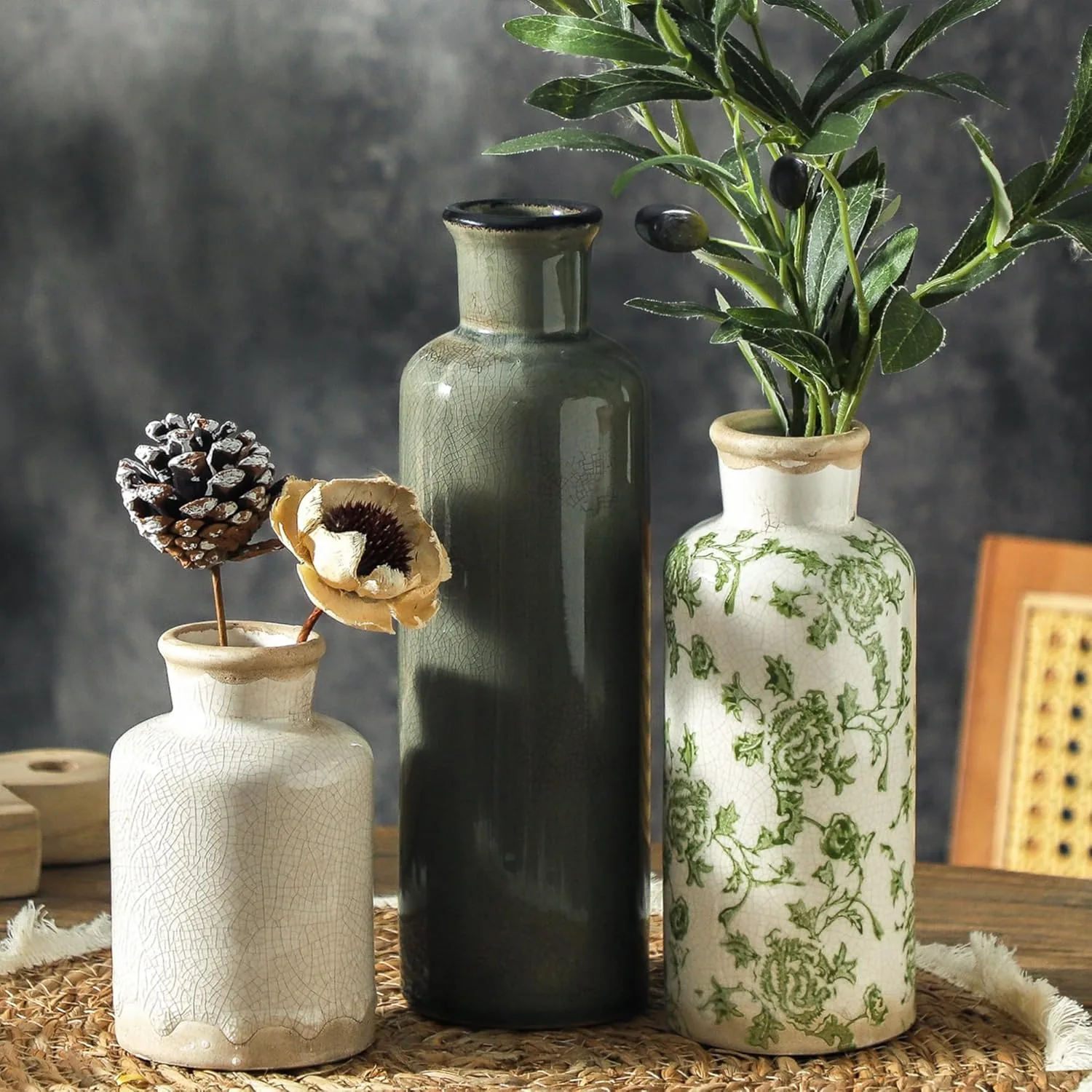
Set of three green and beige vintage ceramic vases styled with dried flowers and olive branches for warm rustic farmhouse table decor.
Vintage ceramic vase decor has steadily replaced sleek, high-gloss porcelain in dining rooms and living spaces over the last few years. The shift is not simply a passing aesthetic preference; it is a fundamental move toward materials that feel grounded and storied. In a home dominated by warm neutral tones, crisp white accessories can sometimes feel too stark, while heavy metallic accents might introduce an unwanted formality. Vintage ceramic vase decor bridges this gap perfectly, offering tactile warmth, muted color palettes, and a sense of history that instantly softens a room.
When I first started styling dining spaces, I relied heavily on glass and polished ceramics. But I quickly realized that those materials reflected too much light, creating a distracting glare rather than a restful focal point. By switching to vintage ceramic vase decor—particularly pieces with matte, distressed, or reactive glazes—I was able to anchor large wooden tables without competing with the surrounding architecture. This guide explores exactly how to implement vintage ceramic vase decor in your own home, from assembling the perfect rustic farmhouse table centerpiece to selecting the right dried botanicals.
The primary strength of vintage ceramic vase decor lies in its textural irregularity. Unlike mass-produced porcelain, which aims for absolute uniformity, vintage-inspired ceramics celebrate imperfections. You might find a subtle pitting in the glaze, a slight asymmetry in the silhouette, or a color variation where the kiln heat was uneven. These are not flaws; they are the exact qualities that make a room feel lived-in and layered.
In a warm neutral palette—think oatmeal linen chairs, natural oak flooring, and cream walls—you need objects that provide contrast through texture rather than bright color. A set of green and beige vintage ceramic vases introduces a gentle shift in tone. The green hints at the natural world outside, while the beige ties back into the room’s foundation. Because the finish is typically matte or heavily distressed, the ceramic absorbs light softly rather than bouncing it around the room, which contributes to a calmer, more serene atmosphere, much like the principles found in our slow living living room guide.
I have found that the most successful vintage ceramic vase decor often involves a grouping of three pieces. The rule of odds is a fundamental styling principle because asymmetrical groupings force the eye to move around the arrangement. While the quiet power of a single good vase is undeniable on a side table, a single vase can look lonely on a long dining table, and a pair often feels too rigid or formal. A trio, however, feels organic and collected over time.
Building a rustic farmhouse table centerpiece requires more than just placing a few vases in the middle of the wood. The transition between the hard surface of the table and the vertical lift of the ceramics needs to be managed carefully. If you place a vintage ceramic vase directly on a bare oak table, the arrangement can feel disconnected, as if the objects were simply abandoned there.
To ground the centerpiece, start with a base layer. A woven rattan tray, a low wooden riser, or a textured linen runner provides a visual boundary that tells the eye, “This is the centerpiece zone.” I prefer a round or oval woven tray for rectangular tables, as the curved edges soften the sharp lines of the furniture.
Once your base is established, arrange your vintage ceramic vase decor within that boundary. Place the tallest vase slightly off-center. This will be your primary focal point and should hold the tallest stems. Position the medium vase next to it, slightly overlapping the silhouette of the tallest piece when viewed from the main entrance of the room. Finally, place the smallest, widest vase or bowl in the foreground. This cascading arrangement ensures the centerpiece looks balanced from every angle in the room.
Set of three green and beige vintage ceramic vases styled with dried flowers and olive branches for warm rustic farmhouse table decor.
This specific vintage ceramic vase set solves the grouping problem immediately. By providing three perfectly scaled pieces in complementary green and beige tones, it eliminates the guesswork of trying to match different ceramics from different stores. The distressed finish provides that essential rustic farmhouse texture, and the varying heights (typically ranging from 5 to 10 inches) are ideal for creating a layered, professional-looking centerpiece on a woven tray.
The stems you choose to display in your vintage ceramic vase decor will entirely dictate the seasonal mood of the room. Because vintage ceramics often lean toward a rustic farmhouse aesthetic, highly structured or exotic fresh flowers—like tropical anthuriums or tight bundles of red roses—tend to look out of place. The vessel and the botanicals must speak the same language.
For a warm neutral table styling approach, dried stems and hardy, woody branches are almost always the best choice. They share the same matte, textural qualities as the ceramic itself.
When styling stems, do not overstuff the vases. A vintage ceramic vase often has a narrow neck, which naturally restricts the number of stems you can use. Allow the branches to drape asymmetrically. A single, perfectly arched olive branch is often more impactful than a dense, crowded bouquet.
One of the most common mistakes I see when people use vintage ceramic vase decor is a mismatch in scale. A 72-inch or 84-inch dining table requires a centerpiece with substantial presence. If your vases are too small, they will look like a cluttered afterthought. If they are too large, they will obstruct conversation across the table.
The ideal height for the tallest vase in a dining table centerpiece is between 10 and 14 inches. Once you add stems, the total height might reach 20 inches. Because the stems are airy and sparse, they will not block the sightlines between guests seated opposite each other. The ceramic vessels themselves should remain low enough to see over easily.
If your table is exceptionally long (over 96 inches), a single central grouping of vintage ceramic vase decor might still feel inadequate. In this scenario, consider creating a dual centerpiece. Instead of one grouping of three, use two groupings of two vases, spaced evenly down the length of a long linen runner. This distributes the visual weight and ensures that guests at the ends of the table have something beautiful to look at.
While a rustic farmhouse table centerpiece is a classic application, vintage ceramic vase decor is incredibly versatile and works just as well in smaller, transitional spaces. If you live in an apartment without a formal dining room, you can apply these same styling principles to a console table, a kitchen island, or a bookshelf.
When styling bookshelves, the goal is to break up the monotonous vertical lines of the books. A medium-sized vintage ceramic vase placed next to a stack of horizontal books provides essential visual relief. Because shelves are typically shallow (around 10 to 12 inches deep), you cannot use a deep, round tray as a base. Instead, let the books act as the base layer. Place a small, beige ceramic vase directly on top of two stacked, neutral-spine books.
For an entryway console, vintage ceramic vase decor can set the tone for the entire house. A single, tall green vintage vase with a dramatic branch placed on the side of the console balances the weight of a table lamp on the opposite end. It provides an immediate sense of organic warmth the moment you walk through the door.
Vintage ceramic vase decor requires a slightly different care routine than standard glass or porcelain. The charm of these pieces lies in their distressed, matte, or pitted finishes, but those same textures can trap dust and moisture if not handled correctly.
Never submerge a vintage-style ceramic vase in a sink full of water. Many of these pieces have unglazed bottoms or microscopic crazing (tiny intentional cracks in the glaze) that can absorb water. If the clay body becomes saturated, it can weaken the vase, cause the glaze to flake, or lead to mildew growth on the inside.
To clean the exterior, use a dry microfiber cloth to wipe away loose dust. For stubborn marks, lightly dampen the cloth with water and dab the area gently; do not scrub aggressively, as you might rub away the applied distressing.
If you absolutely must use fresh flowers, always test the vase for water-tightness first. Place it on a dry paper towel, fill it with water, and leave it for a few hours. If the paper towel is damp, the vase sweats. The safest approach for fresh florals in vintage ceramic vase decor is to drop a simple glass mason jar or a narrow highball glass inside the ceramic vessel to act as a hidden, waterproof liner. This protects your table from water rings and preserves the integrity of your beautiful rustic ceramics for years to come.
By treating your vintage ceramic vase decor with care and styling it intentionally with organic materials, you can create a warm, inviting centerpiece that anchors your room and elevates your everyday living space.