Featured in this article
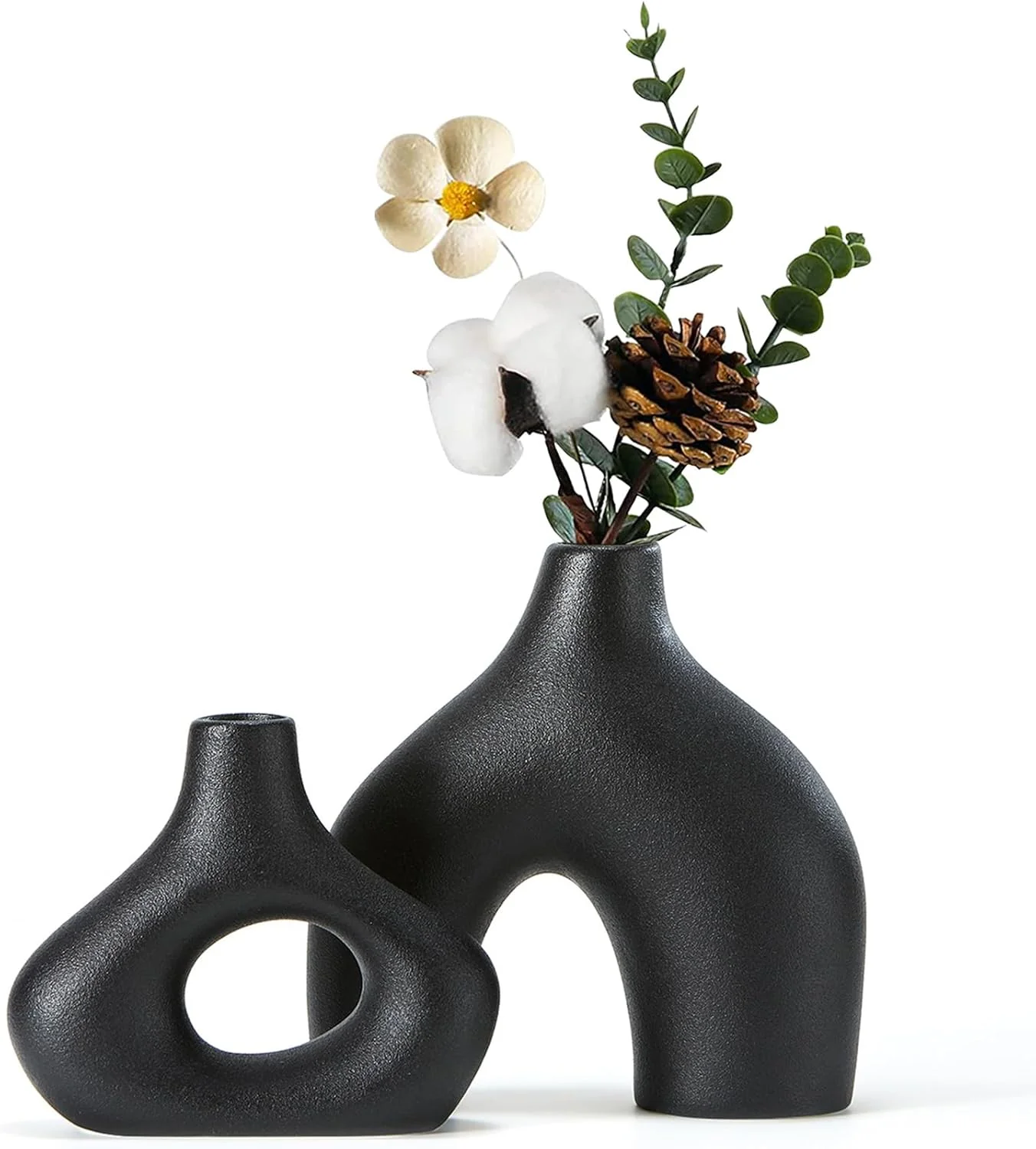
CEMABT Black Ceramic Vase Set of 2
CEMABT Black Ceramic Vase Set of 2 for Modern Minimalist Bohemian Decor, Round Matte Donut Vases for Pampas Grass
Home Decor · Interior Inspiration · Style Guides
Single good vase works best when sizing, placement, light, and material are planned together so the room feels calm, useful, and easy to maintain every day.
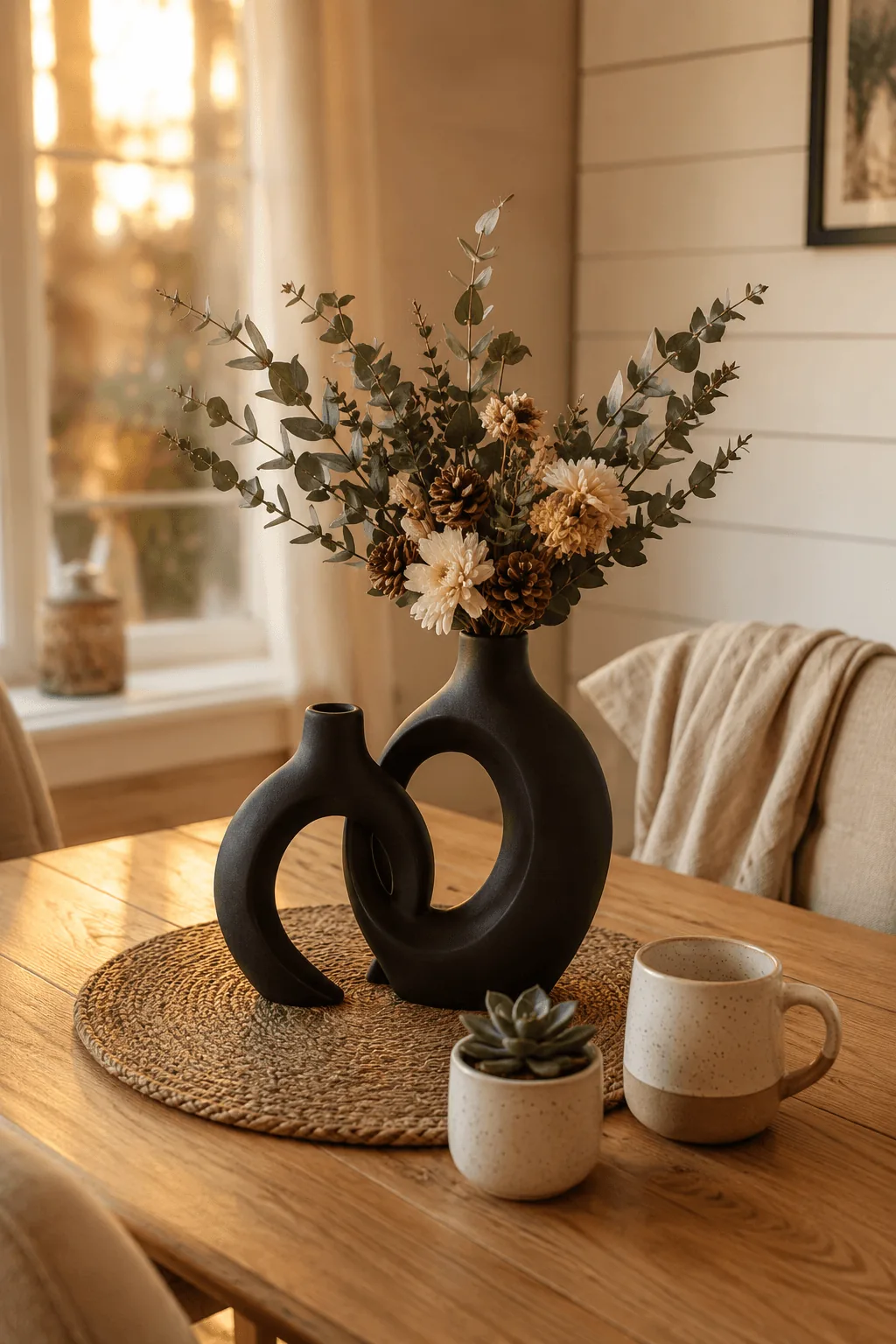
CEMABT Black Ceramic Vase Set of 2 for Modern Minimalist Bohemian Decor, Round Matte Donut Vases for Pampas Grass
Most accessory shopping is additive: another candle, another book, another small ceramic thing. The room gets more cluttered and less calm. The fix is counterintuitive: buy fewer, bigger objects. This single good vase guide keeps the focus on proportion, maintenance, and how the room feels in daily use.
In our room edits, the change works only when it solves a visible problem instead of adding another layer to manage. Use the same restraint behind five accessories that do the work of a redesign and gold bird figurines: measure first, repeat materials deliberately, and leave enough blank space for the change to read.
A 60cm tall vase reads as architecture. A 12cm vase reads as a knick-knack. The same is true for bowls, lamps, and sculpture. One large piece earns its visual weight; ten small pieces fight for attention and lose.
If a piece is shorter than the lampshade nearest it, it’s probably too small.
For this choice, this section matters most when it is checked from the doorway and from the seat or counter where the decision will be seen every day. Give the idea at least 24 hours in normal morning and evening light, then remove one nearby object before deciding whether the room needs anything else.
We design as if every surface is a stage. It isn’t. A vase doesn’t need flowers in it. A bowl doesn’t need to hold something. Allowing one accessory per surface to be empty is the difference between a room that breathes and a room that performs.
The best decorating decision is often a subtraction.
For this choice, this section matters most when it is checked from the doorway and from the seat or counter where the decision will be seen every day. Give the idea at least 24 hours in normal morning and evening light, then remove one nearby object before deciding whether the room needs anything else.
Three places earn an oversized object: a low coffee table, a tall sideboard, and the floor itself (next to a doorway works well — it slows you down on the way in). Avoid the dead zone on the kitchen island where you actually need to chop.
A single good vase is harder to choose, more expensive, and lasts longer than a dozen small ones. That’s the entire trade.
For a wider list of accessory categories that earn their place in a small home, see five accessories that do the work of a whole redesign.
Measure the surface before you shop. A vase should take up enough space to feel deliberate but not so much that the surface stops functioning. On a coffee table, aim for a piece that is roughly one fifth of the table length. On a sideboard, one tall object can reach one third to one half of the wall space above it.
Floor vases need more height than people expect. Anything under 45 cm tends to look stranded unless it sits on a plinth or beside a chair. For the floor, 60-75 cm is the useful range. It reads as a vertical element rather than a misplaced tabletop object.
Colour gets the attention online, but silhouette is what lasts in a room. Look for a profile that is interesting in shadow: a narrow neck, a rounded shoulder, an asymmetrical opening, or a simple cylinder at generous scale. If the outline is weak, the vase will need flowers to justify itself.
Matte surfaces are easier to live with than glossy ones because they absorb light and hide small dust. Gloss can be beautiful, but it reflects windows, lamps, and movement. In a calm room, that extra sparkle often becomes noise.
CEMABT Black Ceramic Vase Set of 2 for Modern Minimalist Bohemian Decor, Round Matte Donut Vases for Pampas Grass
If you do use stems, use fewer than you think. One branch, three dried stems, or a single bunch of grasses is usually enough. The arrangement should extend the vase’s line, not turn it into a florist display. Branches work especially well because they add height without adding much visual weight.
Fresh flowers are lovely, but they shift the room toward colour and maintenance. If the brief is quiet, choose white, cream, green, or dried material. If the brief is seasonal, let the flowers be the temporary accent and keep everything else restrained.
Once the vase arrives, remove the other small objects from that surface for a week. A single strong piece needs space around it. If you immediately flank it with a candle, a tray, a book stack, and a bowl, you have turned the vase into one more object in a crowd.
After a week, add back one useful item if the surface needs it. A coffee table might need coasters. A sideboard might need a lamp. Stop there. The vase is the focal point; the rest is support.
Spend on form, not brand. Vintage shops, garden centers, local ceramic studios, and high-street home sections can all produce excellent large vases. What matters is weight, finish, and silhouette. If it looks good empty and looks good from across the room, it is doing the job.
For this choice, this section matters most when it is checked from the doorway and from the seat or counter where the decision will be seen every day. Give the idea at least 24 hours in normal morning and evening light, then remove one nearby object before deciding whether the room needs anything else.
Stoneware is the safest choice for a quiet room because it has weight, texture, and a surface that usually looks better as the light changes. Terracotta is warmer and more casual; it works well with oak, linen, and woven baskets, but can tip rustic if the rest of the room is already full of natural texture. Glass is elegant when the shape is strong, but clear glass often needs stems to feel finished. Metal can be beautiful, especially aged brass or blackened steel, but it reflects more light and therefore reads louder.
Avoid pieces that try to imitate another material. Faux stone, faux ceramic, and sprayed “aged” finishes rarely improve with time. A simple clay vessel with an imperfect rim will age better than a lightweight object painted to look substantial. Pick up the vase if you can. Weight is not everything, but a piece that feels hollow and fragile often looks hollow and fragile once it is on the floor.
| Material | Best use | Watch for |
|---|---|---|
| Matte stoneware | Sideboards, hearths, floor corners | Chips on very thin rims |
| Terracotta | Warm neutral rooms, patios, rustic kitchens | Too much orange in cool light |
| Clear or smoked glass | Minimal rooms with strong stems | Needing flowers to feel complete |
| Aged metal | Modern rooms needing contrast | Glare and fingerprints |
| Wood or woven vessels | Dry stems only | Moisture damage if used with water |
On a sideboard, place the vase one third in from either end rather than dead center. Centered objects can look staged; off-center objects create movement. Pair it with one lower useful item such as a lamp, stack of books, or bowl. The height difference should be obvious. Two objects of similar height compete instead of composing.
On a coffee table, choose a lower vessel with a wider footprint so it does not block conversation. A tall coffee-table vase belongs only if the table is large and the seating is low. On the floor, use height generously. A 60 cm vase beside a doorway, hearth, console, or reading chair reads as an intentional vertical line. Add felt pads under the base if the floor is wood or tile; heavy ceramic can scratch when it is nudged during cleaning.
Buy new when you need a precise size, a watertight interior, or a pair for symmetry. Buy vintage when the room needs character more than precision. Vintage vessels often have better silhouettes for the money, especially studio pottery from local markets, old garden urns, and simple stoneware storage jars. Check for cracks by tapping lightly and listening for a dull sound. Hairline cracks are fine for dry stems, risky for water, and usually not worth full price.
For online buying, ignore tightly cropped product photos and look for at least one image that shows the vase on a real table, floor, or shelf. Scale is easy to fake in isolation. Read the dimensions twice: height, widest diameter, opening diameter, and weight. The opening diameter matters because a very wide mouth needs more stems, while a narrow mouth can hold one branch elegantly.
When the vase enters the room, remove three smaller decorative objects from the same zone. This is the discipline that makes the purchase work. A substantial vase is not an invitation to style more around it; it is permission to style less. Put the removed objects away for a week rather than moving them to another surface. If you miss one, bring back the useful or sentimental item. If you do not miss any, the vase has done its job.
The rule is especially useful for open-plan rooms where every surface is visible at once. One large vase on a console can calm the view from the kitchen, dining table, and sofa simultaneously. Three small objects may look acceptable from one angle and messy from another. When a room is seen from multiple directions, scale becomes a kind of editing tool: fewer larger forms, more space around them, less visual argument across the room.
Measure the surface, choose the height range, decide whether it needs to hold water, and set the maximum mouth diameter before browsing. Then filter by finish and silhouette. That order keeps you from falling for a vase that looks beautiful online but needs a different house. A good vase should answer yes to three questions: can it sit empty, can it be seen from the doorway, and can the room around it get quieter because it is there?
For this choice, this section matters most when it is checked from the doorway and from the seat or counter where the decision will be seen every day. Give the idea at least 24 hours in normal morning and evening light, then remove one nearby object before deciding whether the room needs anything else.
Start with measurements rather than mood. Mark the likely footprint with painter’s tape, books, or a folded towel before buying or rearranging anything. A useful rule is to leave at least 60 cm for a main walkway, 35-45 cm between a sofa and coffee table, and 10 cm of visible border around small textiles or objects that sit on the floor. Those numbers are not decorative; they decide whether the idea feels calm once people actually move through the room.
Check the material against what is already present. If the room has several glossy surfaces, add matte texture. If it has many pale fabrics, add one grounded wood, stone, black, or brass note. If it already has strong contrast, keep the new piece quieter. The goal is not to match every finish, but to repeat one material family so the choice feels connected to the room instead of dropped into it from a product photo.
Plan maintenance before styling. Anything near water, food, pets, children, or direct sun needs a cleaning rhythm and a tolerance for wear. Soft textiles may need weekly washing, stone may need coasters, acrylic may need microfiber cleaning, wood may need pads under objects, and lighting may need a dimmer that is compatible with the fixture. A beautiful choice that is annoying to maintain usually becomes visual clutter within a month.
Use the one-in, one-out test after the change lands. Add the new piece, then remove one smaller object in the same sightline. If the room feels more intentional, leave the smaller object out. If the room feels bare, return it after a week. This keeps the edit from turning into accumulation and protects the calm that made the change worth considering in the first place. Used this way, single good vase becomes part of the room’s structure rather than a loose accent.
Use the change as one clear decision, then remove or quiet the nearest competing object. The room should gain a job, a material note, or a focal point rather than another small thing to maintain.
Measure the available width, depth, height, and the walkway that remains after the piece or idea is in place. For most rooms, 60 cm of clear passage and visible breathing room around the object prevents a styled choice from becoming an obstacle.
Yes, if the choice is reversible and scaled to the room rather than the product photo. Freestanding pieces, textiles, plug-in lighting, removable hooks, and careful styling usually give the best result without changing the building.
The common mistake is treating the idea as decoration before checking proportion and maintenance. If the size is wrong or the material is hard to live with, even an attractive choice will make the room feel less settled over time.