The household-organisation genre is full of three-hour Sunday systems with colour-coded labels. Most of us won’t do them. The trick is a routine short enough that you’ll do it at all — twenty-five minutes, in the same order every week. This Sunday-night reset guide keeps the focus on proportion, maintenance, and how the room feels in daily use.
In our room edits, the change works only when it solves a visible problem instead of adding another layer to manage. Use the same restraint behind things you already own and calm kitchen: measure first, repeat materials deliberately, and leave enough blank space for the change to read.
Set a timer
Twenty-five minutes. Not forty, not “however long it takes”. When the timer goes off, you stop, regardless of what’s left.
For this choice, this section matters most when it is checked from the doorway and from the seat or counter where the decision will be seen every day. Give the idea at least 24 hours in normal morning and evening light, then remove one nearby object before deciding whether the room needs anything else.
The fixed order
The order matters more than the speed. Same five rooms, same five tasks, same order every week.
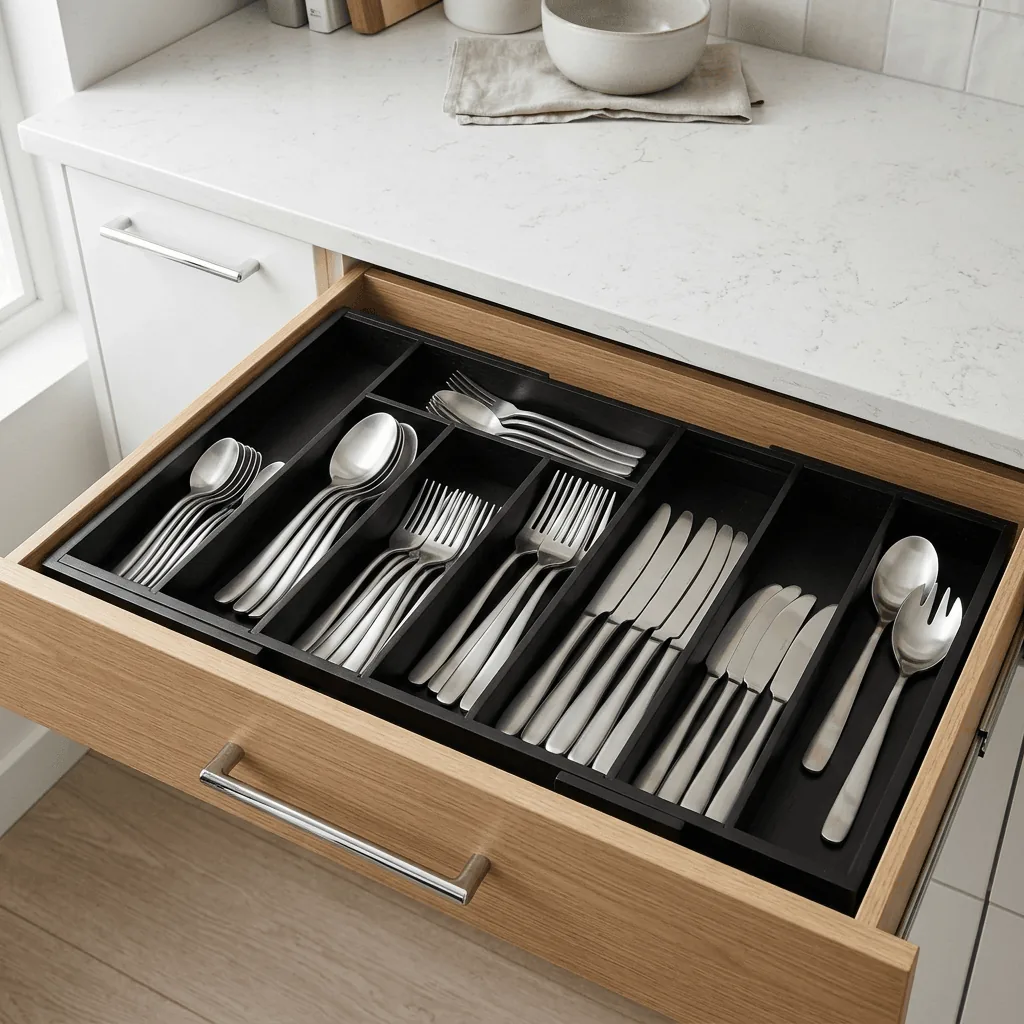
- Kitchen counters clear. Not clean — clear. Everything off the counters and into its place. Two minutes.
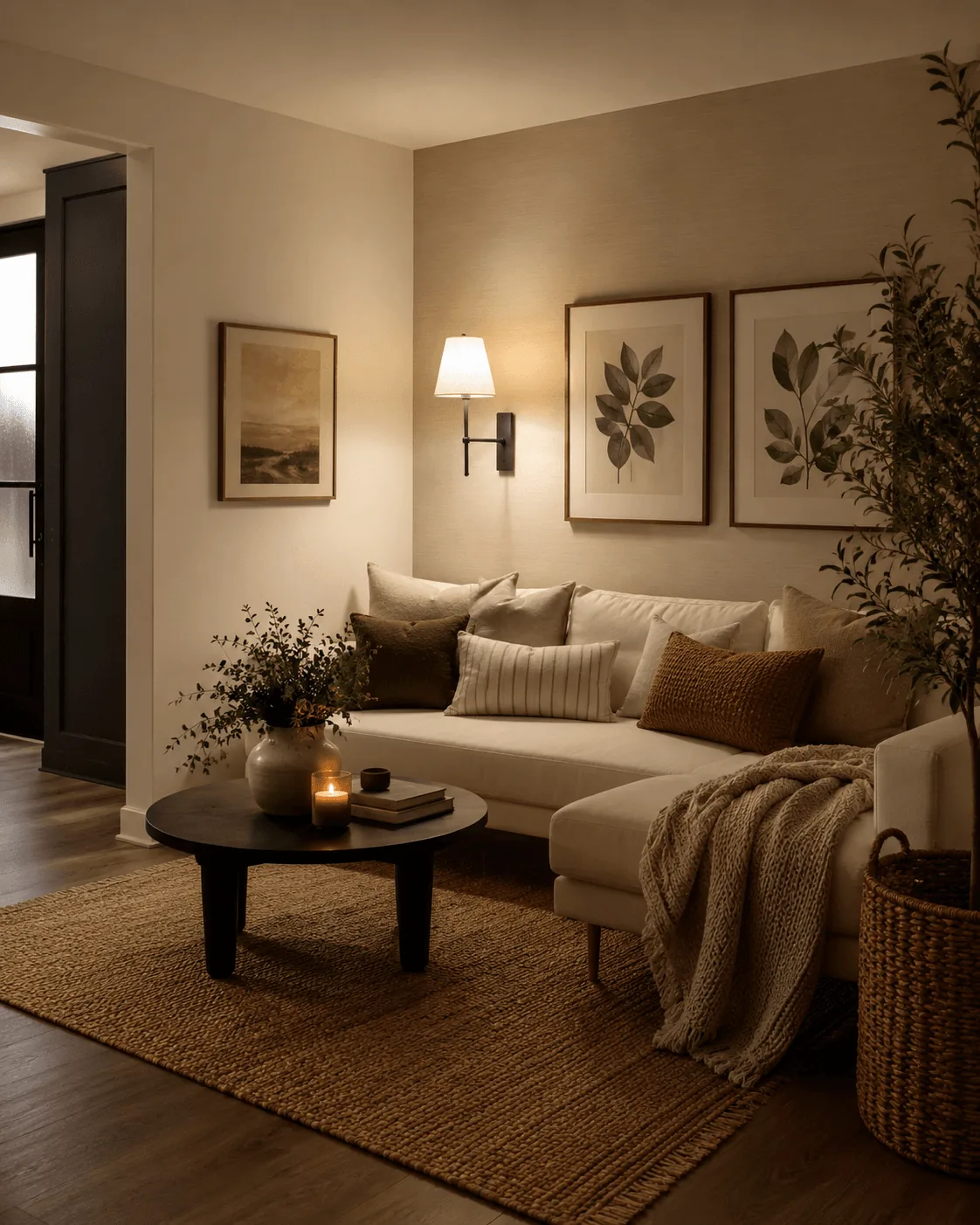
- Surfaces around the sofa. Three throws folded, two cushions plumped, remotes in one place. Three minutes.
- Floors visual sweep. Pick up shoes, bags, kids’ toys. Don’t vacuum.
- Bedside tables. Glass back to the kitchen, books stacked, charger plugged in. Two minutes.
- Set the morning. Coffee filled, kettle full, breakfast plates out. Five minutes.
For this choice, this section matters most when it is checked from the doorway and from the seat or counter where the decision will be seen every day. Give the idea at least 24 hours in normal morning and evening light, then remove one nearby object before deciding whether the room needs anything else.
This final check is deliberately practical: look at the section from the doorway, then again from the place where you use the room most often. If the idea only works from one angle, simplify the surrounding objects before you add anything else.
Why this works
Organising is bottlenecked by decision-making, not effort. A fixed order eliminates the decisions. You stop asking “where do I start” — you start at the kitchen counters because that’s what you always do.
A reset that takes twenty-five minutes once a week is more useful than a reset that takes three hours and never happens.
What it isn’t
It isn’t cleaning. The Sunday-night reset is a visual reset — it makes the house look ready, so Monday morning starts in a calm room. Deep cleaning is a different routine, on a different cadence, and not in this article.
The point is leverage. Twenty-five minutes on Sunday saves the cumulative friction of every “where is the…” the rest of the week.
The reset basket
Use one basket, not a different storage solution in every room. Start in the kitchen and move through the house carrying the basket with you. Anything that belongs elsewhere goes in. At the end, make one return loop and empty it. This keeps the reset moving forward instead of turning each room into a sorting project.
The basket is not storage. If something is still in it on Monday night, the system failed at the final step. Put the basket somewhere inconvenient after the reset so it cannot quietly become another container of undecided objects.
What to prepare for Monday
The reset works best when it removes the first three decisions of the next morning. Set out the coffee or tea, clear the sink, choose the breakfast bowl or lunch container, and put the bag or keys where they belong. You are not trying to become a different person on Monday morning; you are making the room less demanding when you are tired.
If you work from home, reset the desk too, but keep it to three minutes. Close the laptop, clear cups, stack papers, plug in the charger. Do not open email. Sunday-night organizing should not become Sunday-night work.
How to make it stick
Attach the reset to an existing cue: after dinner, after the last laundry load, after the children are in bed, or before a specific Sunday show. A floating habit needs willpower. A habit attached to an existing moment needs less negotiation.
Use the same playlist or timer sound each week if that helps. The small ritual signal tells everyone in the house what is happening. The goal is not perfection; it is a repeatable shift from weekend mode to week mode.
Adjusting for real homes
In a shared home, assign zones rather than tasks. One person does kitchen surfaces, one does living room, one does entry and bags. Zones prevent the “I thought you were doing that” problem. If you live alone, use zones for yourself so the routine stays bounded.
With children, make the floor sweep the only child-owned part. Toys into baskets, shoes by the door, school bag visible. Do not ask children to participate in the whole reset unless you want the routine to triple in length.
The visual finish
End with light. Turn on one warm lamp, not the overhead. That final cue makes the reset visible and gives the room a reward. It is the same reason our lighting guide starts with low, warm sources: the house feels calmer when the light supports the work you just did.
For this choice, this section matters most when it is checked from the doorway and from the seat or counter where the decision will be seen every day. Give the idea at least 24 hours in normal morning and evening light, then remove one nearby object before deciding whether the room needs anything else.
How to Use Sunday-night reset at Home
Start with measurements rather than mood. Mark the likely footprint with painter’s tape, books, or a folded towel before buying or rearranging anything. A useful rule is to leave at least 60 cm for a main walkway, 35-45 cm between a sofa and coffee table, and 10 cm of visible border around small textiles or objects that sit on the floor. Those numbers are not decorative; they decide whether the idea feels calm once people actually move through the room.
Check the material against what is already present. If the room has several glossy surfaces, add matte texture. If it has many pale fabrics, add one grounded wood, stone, black, or brass note. If it already has strong contrast, keep the new piece quieter. The goal is not to match every finish, but to repeat one material family so the choice feels connected to the room instead of dropped into it from a product photo.
Plan maintenance before styling. Anything near water, food, pets, children, or direct sun needs a cleaning rhythm and a tolerance for wear. Soft textiles may need weekly washing, stone may need coasters, acrylic may need microfiber cleaning, wood may need pads under objects, and lighting may need a dimmer that is compatible with the fixture. A beautiful choice that is annoying to maintain usually becomes visual clutter within a month.
Use the one-in, one-out test after the change lands. Add the new piece, then remove one smaller object in the same sightline. If the room feels more intentional, leave the smaller object out. If the room feels bare, return it after a week. This keeps the edit from turning into accumulation and protects the calm that made the change worth considering in the first place. Used this way, Sunday-night reset becomes part of the room’s structure rather than a loose accent.
FAQ
How do I use this idea without making the room feel busy?
Use the change as one clear decision, then remove or quiet the nearest competing object. The room should gain a job, a material note, or a focal point rather than another small thing to maintain.
What should I measure before choosing it?
Measure the available width, depth, height, and the walkway that remains after the piece or idea is in place. For most rooms, 60 cm of clear passage and visible breathing room around the object prevents a styled choice from becoming an obstacle.
Can this work in a rental or small home?
Yes, if the choice is reversible and scaled to the room rather than the product photo. Freestanding pieces, textiles, plug-in lighting, removable hooks, and careful styling usually give the best result without changing the building.
What is the most common mistake with this idea?
The common mistake is treating the idea as decoration before checking proportion and maintenance. If the size is wrong or the material is hard to live with, even an attractive choice will make the room feel less settled over time.