Featured in this article
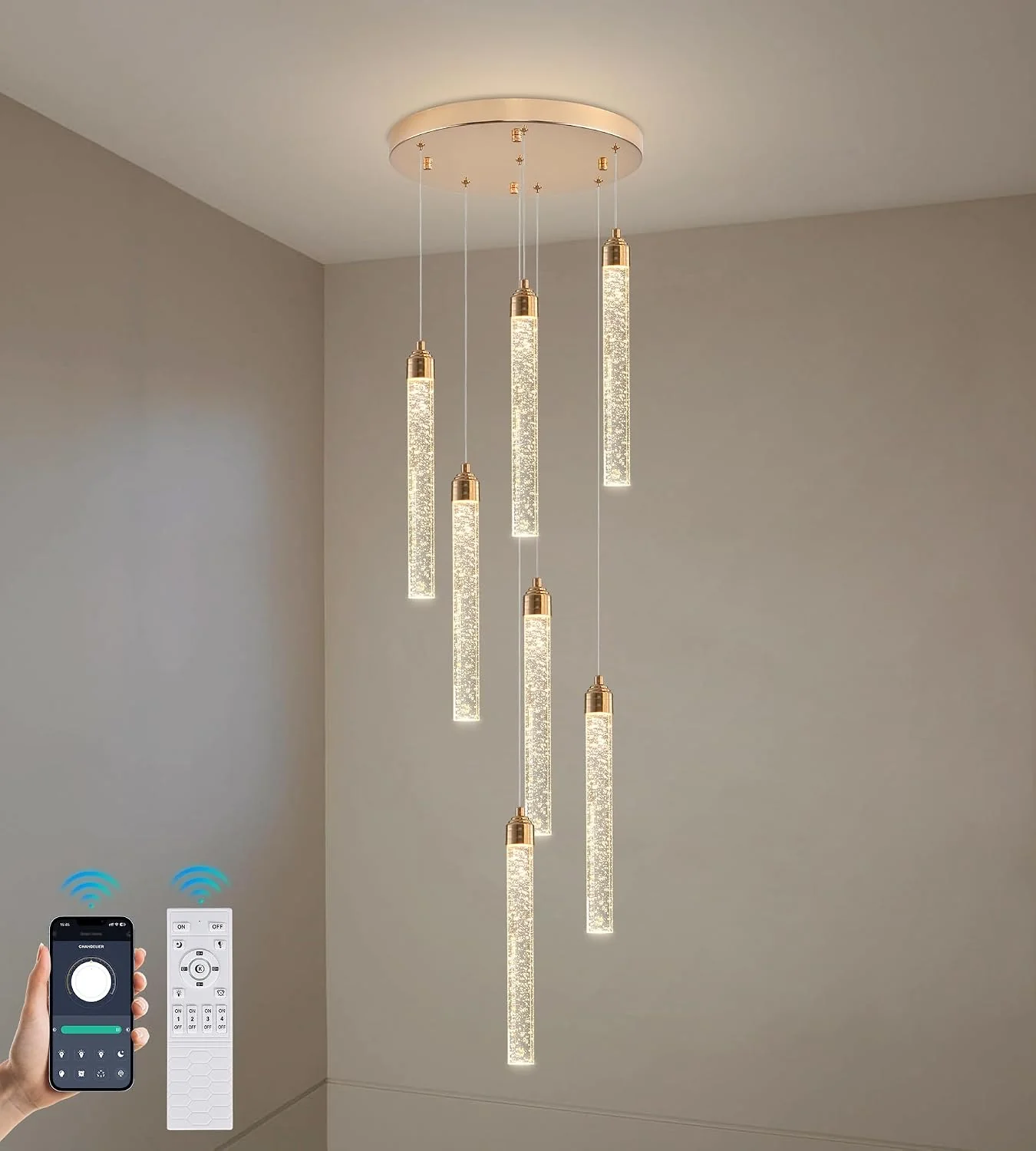
Upfelw Crystal Staircase Chandelier
Upfelw Crystal Staircase Chandelier, Modern Gold Spiral Dimmable LED Cluster Raindrop Foyer Chandelier, 7 Light Remote Control
Home Decor · Interior Inspiration · Style Guides
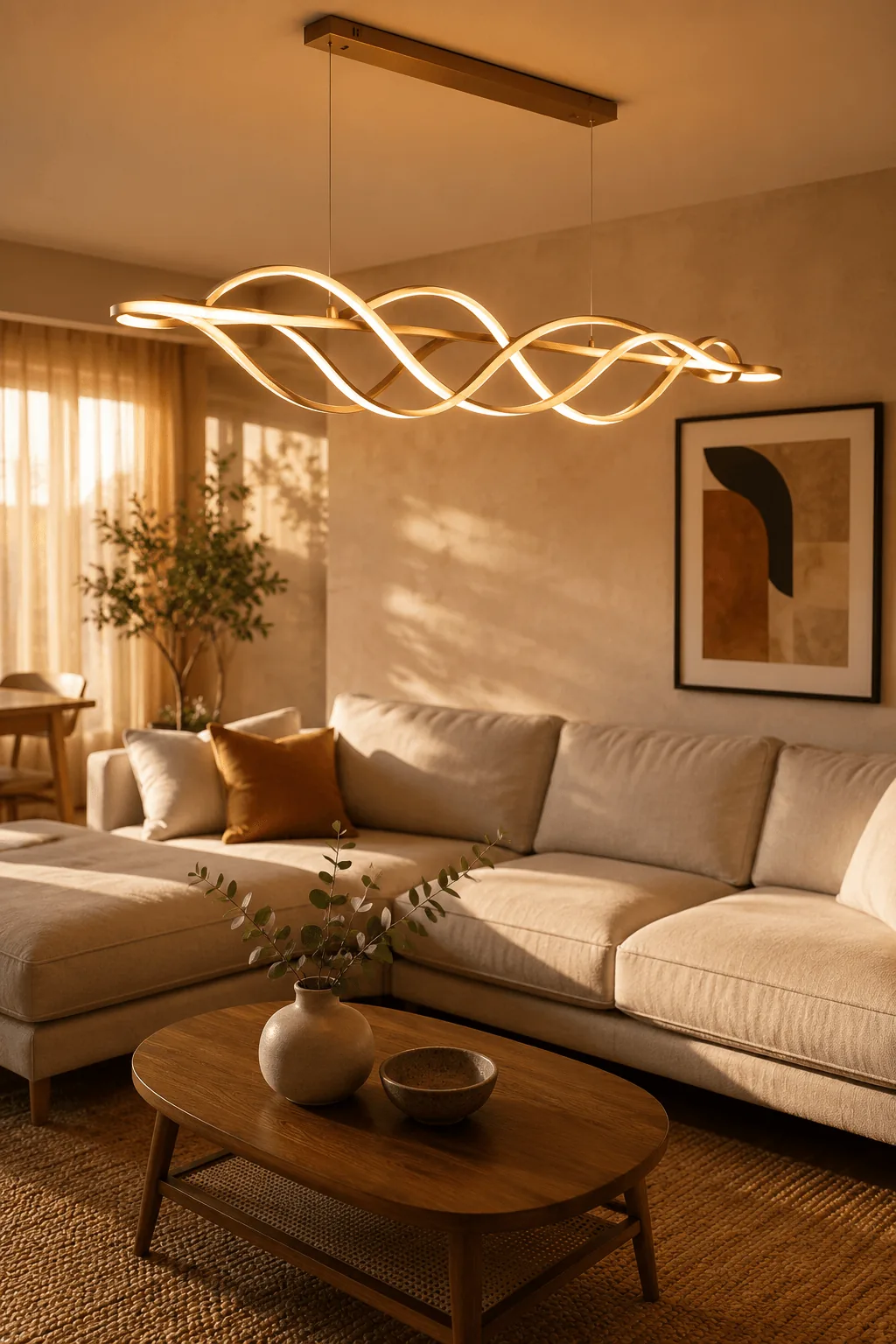
Modern twisted chandelier works best when sizing, placement, light, and material are planned together so the room stays calm, useful, and easy to maintain.
Upfelw Crystal Staircase Chandelier, Modern Gold Spiral Dimmable LED Cluster Raindrop Foyer Chandelier, 7 Light Remote Control
A twisted LED chandelier works best when it is treated as warm architecture, not as a novelty fixture. The shape adds movement above the seating area, while the glow pulls attention upward without needing a busy ceiling detail. This modern twisted chandelier guide keeps the focus on proportion, maintenance, and how the room feels in daily use.
In our room edits, the change works only when it solves a visible problem instead of adding another layer to manage. Use the same restraint behind lighting upgrades under $70 and slow-living living room: measure first, repeat materials deliberately, and leave enough blank space for the change to read.
The safest version for a living room is warm white, dimmable, and visually light enough that it does not crowd the room. In a small apartment, the fixture should create a pool of softness above the coffee table or sofa rather than glare across the whole room.
Straight-line pendants can feel severe in a room full of soft upholstery. A twisted form solves that by adding curve and shadow overhead. It pairs especially well with boucle, linen, oak, travertine, and woven textures because those materials already lean tactile.
The key is restraint. Let the chandelier be the only sculptural ceiling piece. If the room already has a dramatic floor lamp, oversized mirror, and strong wall art, choose a quieter pendant or the ceiling will start competing with the furniture.
Start with color temperature. A living room chandelier should be able to hold a real warm white setting around 2700 K or 3000 K. RGB color modes are optional; warm white is what you will use every evening.
Then check dimming. A sculptural chandelier at full brightness can look showroom-bright. On a dimmer, it becomes atmosphere. If the fixture has an app, make sure it also has a wall switch, remote, or memory setting so guests can use it without instructions.
Finally, measure drop height. Over a coffee table, the fixture can hang lower because no one walks underneath it. In an open route, keep the lowest point comfortably above head height. The goal is a golden ceiling line, not an obstacle.
Use a twisted chandelier in rooms with simple furniture and warm neutral materials. Beige, cream, oak, walnut, stone, and soft black accents give the fixture enough quiet space to read as elegant rather than busy.
It is strongest above a low seating zone, a round dining table, or the center of a compact living room. Avoid placing it in a corner unless the room has another source of general light; sculptural pendants look best when they anchor the main zone.
Repeat the curve once below the fixture: a rounded sofa arm, a circular coffee table, a soft ceramic vase, or an arched mirror. One echo makes the shape feel connected. Too many echoes make the room feel themed.
If the chandelier is the warmest light in the room, keep nearby lamps in the same temperature family. A 2700 K chandelier beside a 5000 K task lamp makes the whole room feel unresolved.
For a compact apartment living room, choose a chandelier that is visually open rather than bulky. A spiral or ribbon shape can have presence without forming a dark mass over the seating. If the sofa, rug, and coffee table already fill most of the floor, the ceiling fixture should add height rather than more heaviness.
In a larger room, the same style needs more diameter or a clustered form. A small sculptural pendant in a generous living room can look accidental, especially if the sofa is sectional-sized. Use the seating group as the measure: the chandelier should relate to the coffee table or central rug, not to the whole room envelope.
Upfelw Crystal Staircase Chandelier, Modern Gold Spiral Dimmable LED Cluster Raindrop Foyer Chandelier, 7 Light Remote Control
Warm white diffusers are easier to live with than exposed cool LEDs. Frosted covers soften the line of the fixture, while bare strips can look sharp in the evening. If the design includes metal, matte black and champagne finishes tend to age better than mirror chrome in a soft neutral room.
Avoid overly glossy gold unless the rest of the room can support it. In a room with linen, oak, boucle, and stone, a subtle metal finish reads warmer and more expensive than a bright reflective one. The fixture should catch light, not flash every time someone walks past.
Before ordering, confirm whether the canopy covers the existing junction box. Many sculptural LED fixtures have a modern canopy that is smaller or wider than older ceiling roses. If the ceiling needs patching, do that before the electrician arrives.
Check the driver location too. Some LED fixtures hide a driver in the canopy, which can make the ceiling hardware larger than expected. Others need compatible dimmers. A beautiful fixture that buzzes, flickers, or refuses to dim will feel cheap no matter how good the shape is.
The first mistake is choosing a chandelier because the product image is dramatic. The question is whether the fixture still looks calm when the rest of the room is visible. If it needs a black background, foggy photography, or extreme cropping to look good, it may be too theatrical for a home.
The second mistake is relying on the chandelier as the only evening light. Ceiling fixtures are useful, but living rooms need layers. Pair the chandelier with a table lamp or floor lamp so the room can shift from cleaning brightness to conversation light. For a lower-cost version of the same principle, see three lighting upgrades under $70.
The best version feels visible but not loud. It should make the room warmer when it is on and still look intentional when it is off.
This final check is deliberately practical: look at the section from the doorway, then again from the place where you use the room most often. If the idea only works from one angle, simplify the surrounding objects before you add anything else.
Start with measurements rather than mood. Mark the likely footprint with painter’s tape, books, or a folded towel before buying or rearranging anything. A useful rule is to leave at least 60 cm for a main walkway, 35-45 cm between a sofa and coffee table, and 10 cm of visible border around small textiles or objects that sit on the floor. Those numbers are not decorative; they decide whether the idea feels calm once people actually move through the room.
Check the material against what is already present. If the room has several glossy surfaces, add matte texture. If it has many pale fabrics, add one grounded wood, stone, black, or brass note. If it already has strong contrast, keep the new piece quieter. The goal is not to match every finish, but to repeat one material family so the choice feels connected to the room instead of dropped into it from a product photo.
Plan maintenance before styling. Anything near water, food, pets, children, or direct sun needs a cleaning rhythm and a tolerance for wear. Soft textiles may need weekly washing, stone may need coasters, acrylic may need microfiber cleaning, wood may need pads under objects, and lighting may need a dimmer that is compatible with the fixture. A beautiful choice that is annoying to maintain usually becomes visual clutter within a month.
Use the one-in, one-out test after the change lands. Add the new piece, then remove one smaller object in the same sightline. If the room feels more intentional, leave the smaller object out. If the room feels bare, return it after a week. This keeps the edit from turning into accumulation and protects the calm that made the change worth considering in the first place. Used this way, modern twisted chandelier becomes part of the room’s structure rather than a loose accent.
Use the change as one clear decision, then remove or quiet the nearest competing object. The room should gain a job, a material note, or a focal point rather than another small thing to maintain.
Measure the available width, depth, height, and the walkway that remains after the piece or idea is in place. For most rooms, 60 cm of clear passage and visible breathing room around the object prevents a styled choice from becoming an obstacle.
Yes, if the choice is reversible and scaled to the room rather than the product photo. Freestanding pieces, textiles, plug-in lighting, removable hooks, and careful styling usually give the best result without changing the building.
The common mistake is treating the idea as decoration before checking proportion and maintenance. If the size is wrong or the material is hard to live with, even an attractive choice will make the room feel less settled over time.