Featured in this article
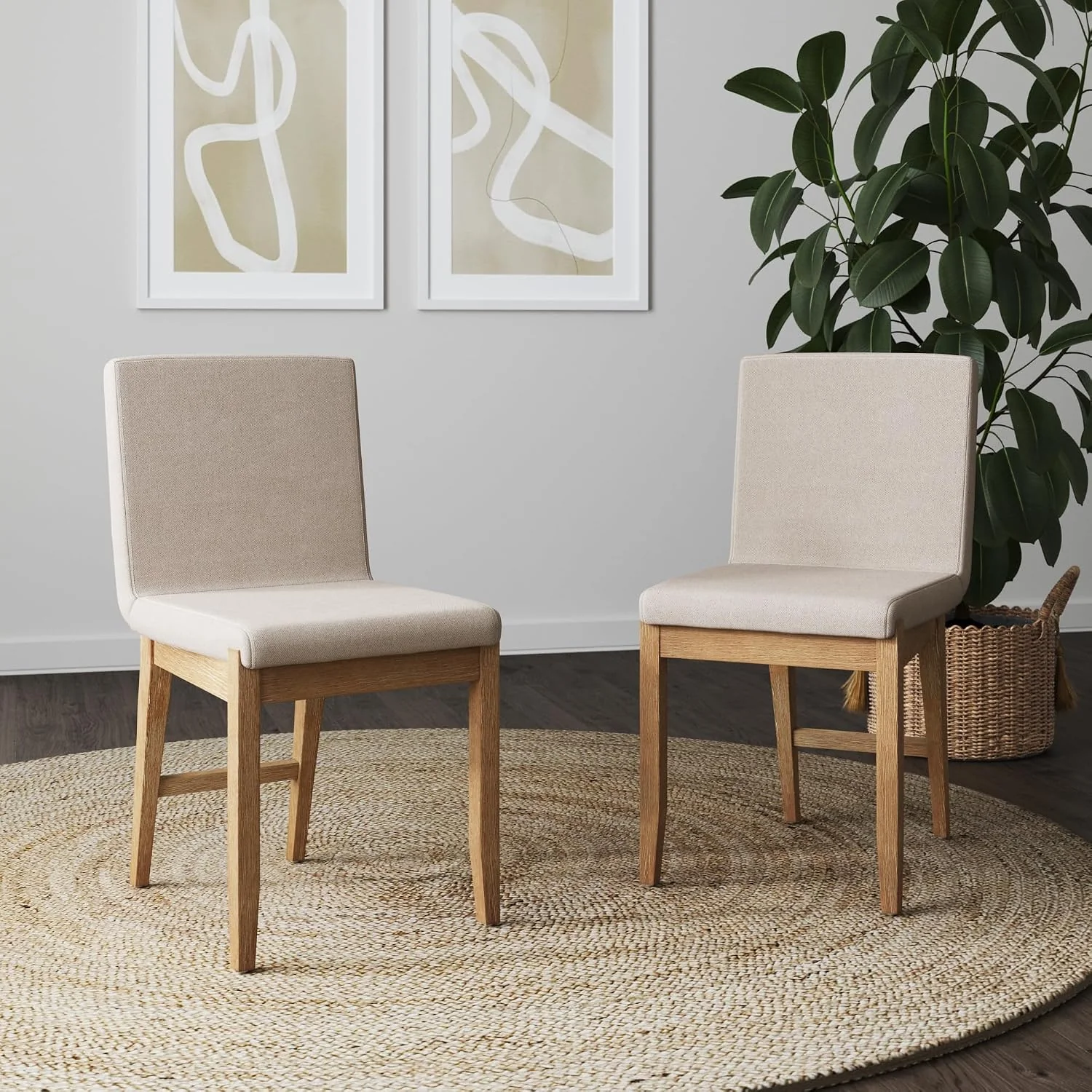
2xhome Solid Wooden Upholstered Dining Chair
2xhome Solid Wooden Dining Chair, Upholstered Beige Cloth Linen Cushioned Seat, Modern Farmhouse Side Chair, Natural Beech Wood Legs
Home Decor · Interior Inspiration · Style Guides
Scandinavian dining chair works best when sizing, placement, light, and material are planned together so the room stays calm, useful, and easy to maintain.
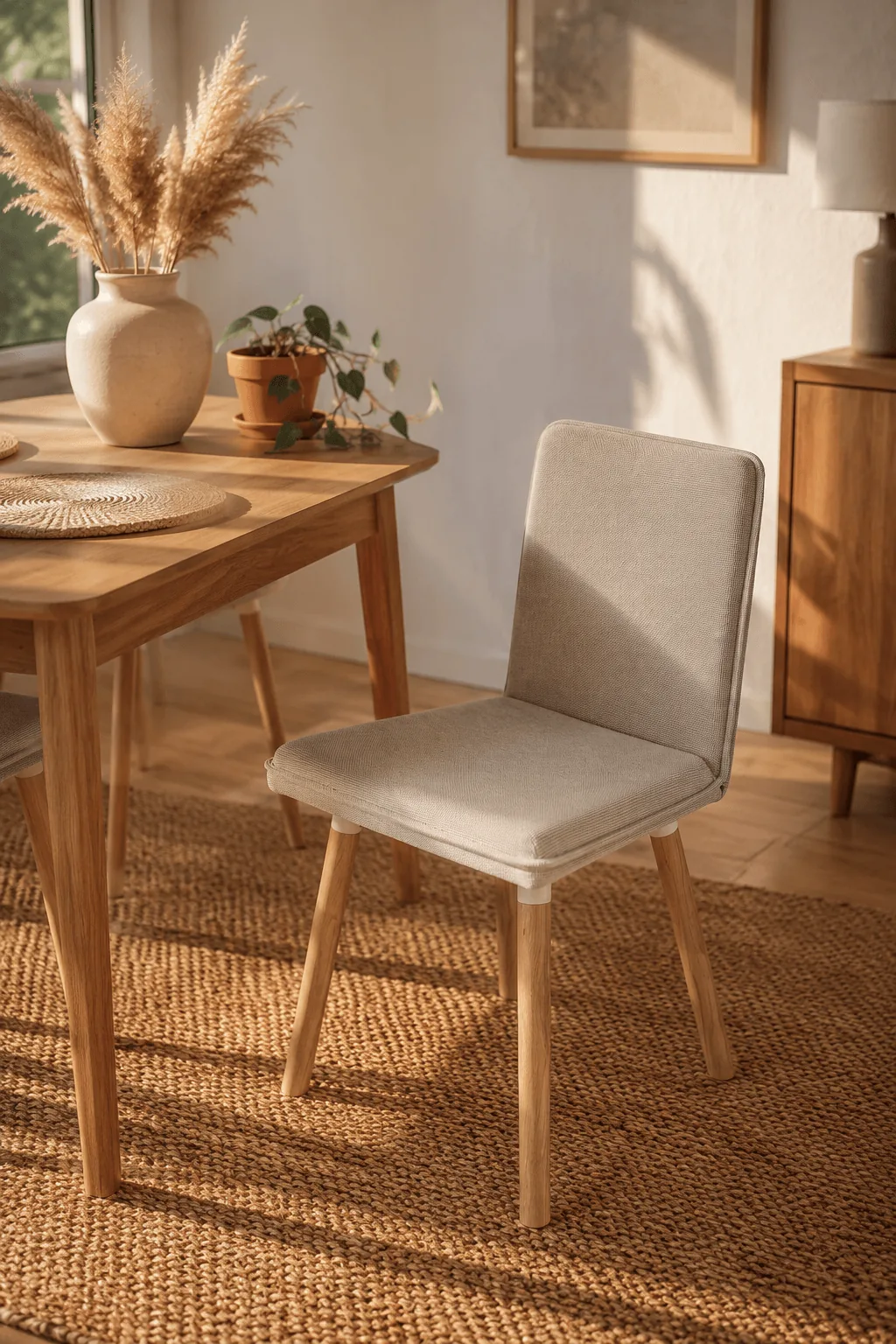
2xhome Solid Wooden Dining Chair, Upholstered Beige Cloth Linen Cushioned Seat, Modern Farmhouse Side Chair, Natural Beech Wood Legs
A good Scandinavian dining chair does not shout. It softens the table, adds texture, and keeps the room practical enough for everyday meals. Beige upholstery with oak legs is popular because it sits between two useful moods: tailored and relaxed.
In our room edits, the change works only when it solves a visible problem instead of adding another layer to manage. Use the same restraint behind calm kitchen and earth-toned palettes: measure first, repeat materials deliberately, and leave enough blank space for the change to read.
The mistake is buying only for the photograph. A dining chair has to survive crumbs, chair legs dragging, guests leaning back, and the daily rhythm of sitting down for five minutes longer than planned.
Oak brings warmth without the visual weight of darker wood. Beige fabric keeps the seat soft but still neutral enough to work with white, cream, mushroom, sage, black, or stone. Together they create contrast through texture rather than color.
This combination is especially useful in small dining spaces because it reads lighter than a fully upholstered chair and warmer than a plastic or metal shell chair.
2xhome Solid Wooden Dining Chair, Upholstered Beige Cloth Linen Cushioned Seat, Modern Farmhouse Side Chair, Natural Beech Wood Legs
Check seat height first. Most dining tables need a chair seat around 45 cm high, with enough clearance for knees and arms. If the chair has arms, measure the arm height against the underside of the table before buying.
Next, check the fabric. A tight weave is easier to clean than boucle or loose linen. If the chair will be used every day, choose a fabric with a little texture but not so much nap that every crumb catches.
Finally, check the leg finish. Pale oak, ash, and beech can all work, but the finish should relate to something else in the room: floorboards, a table, a picture frame, a shelf, or a serving board.
Four matching chairs are calm and easy. Six matching chairs can start to feel like a showroom unless the table has strong character. For a longer table, consider upholstered side chairs with simpler end chairs, or keep the chairs consistent and add variation with a linen runner, ceramic bowl, or pendant light.
In a very small dining nook, choose the lightest visual profile that still feels comfortable. Slim legs, a curved back, and a neutral seat let the eye move around the table instead of stopping at a block of furniture.
Skip bright white upholstery unless the chair is genuinely washable. Skip overly splayed legs in tight rooms; they look elegant online and catch ankles in real life. Skip chairs that hide their dimensions. Dining chairs are not decorative objects first. They are the furniture you move more than anything else.
For this choice, this section matters most when it is checked from the doorway and from the seat or counter where the decision will be seen every day. Give the idea at least 24 hours in normal morning and evening light, then remove one nearby object before deciding whether the room needs anything else.
A beige upholstered oak chair works with a pale oak table, a darker walnut table, or a painted table, but each pairing creates a different mood. Oak-on-oak is the quietest and most Scandinavian. Walnut adds contrast and feels more grown-up. A white or cream table makes the chairs the warmest material in the room.
If the chair legs and table are both wood, they do not need to match exactly. They need to belong to the same temperature family. A honey oak chair beside a grey-washed table can look mismatched because one reads warm and the other reads cool. If the tones are close but not identical, use a rug, pendant, or ceramic centerpiece to bridge them.
Back angle matters more than padding thickness. A heavily padded chair with a stiff upright back can be less comfortable than a slim chair with a gentle recline. If you order online, study side-view photos and dimensions, not only the front view.
Seat depth matters too. A very deep seat may look lounge-like, but it can be awkward at a dining table because people end up perched forward. A moderate seat depth keeps meals, work sessions, and long conversations comfortable without turning the chair into an armchair.
For a round table, matching chairs usually look best because the whole set is visible at once. For a rectangular table, you have more flexibility. Four side chairs plus two different end chairs can make the room feel collected, but only if the end chairs are not too bulky.
In a small apartment, buy only the chairs you use daily and keep one or two folding or stackable extras elsewhere. Crowding a small dining nook with six permanent chairs makes the room feel smaller every day for the sake of a rare dinner.
Neutral upholstery needs a plan. Look for removable seat pads, performance fabric, or at least a fabric that can handle spot cleaning. If the chair will be used by children, pets, or anyone who eats tomato sauce enthusiastically, a slightly darker oatmeal fabric is more forgiving than pale cream.
Wood legs also need protection. Felt pads are not glamorous, but they stop the chair from scraping floors and reduce noise in apartment buildings. Check them every few months; once they collect grit, they can scratch like sandpaper.
The Scandinavian quality does not come from the word “minimalist” in the listing. It comes from proportion: light legs, useful comfort, natural materials, and no unnecessary ornament. If the chair has too many seams, buttons, curves, metal caps, or contrast stitching, it starts moving away from calm dining-room furniture and toward trend furniture.
Pair these chairs with one warm pendant, a plain ceramic bowl, linen napkins, and a table surface that can breathe. For the kitchen side of the same warm-neutral logic, see a calm kitchen in three decisions.
Start with measurements rather than mood. Mark the likely footprint with painter’s tape, books, or a folded towel before buying or rearranging anything. A useful rule is to leave at least 60 cm for a main walkway, 35-45 cm between a sofa and coffee table, and 10 cm of visible border around small textiles or objects that sit on the floor. Those numbers are not decorative; they decide whether the idea feels calm once people actually move through the room.
Check the material against what is already present. If the room has several glossy surfaces, add matte texture. If it has many pale fabrics, add one grounded wood, stone, black, or brass note. If it already has strong contrast, keep the new piece quieter. The goal is not to match every finish, but to repeat one material family so the choice feels connected to the room instead of dropped into it from a product photo.
Plan maintenance before styling. Anything near water, food, pets, children, or direct sun needs a cleaning rhythm and a tolerance for wear. Soft textiles may need weekly washing, stone may need coasters, acrylic may need microfiber cleaning, wood may need pads under objects, and lighting may need a dimmer that is compatible with the fixture. A beautiful choice that is annoying to maintain usually becomes visual clutter within a month.
Use the one-in, one-out test after the change lands. Add the new piece, then remove one smaller object in the same sightline. If the room feels more intentional, leave the smaller object out. If the room feels bare, return it after a week. This keeps the edit from turning into accumulation and protects the calm that made the change worth considering in the first place. Used this way, Scandinavian dining chair becomes part of the room’s structure rather than a loose accent.
Use the change as one clear decision, then remove or quiet the nearest competing object. The room should gain a job, a material note, or a focal point rather than another small thing to maintain.
Measure the available width, depth, height, and the walkway that remains after the piece or idea is in place. For most rooms, 60 cm of clear passage and visible breathing room around the object prevents a styled choice from becoming an obstacle.
Yes, if the choice is reversible and scaled to the room rather than the product photo. Freestanding pieces, textiles, plug-in lighting, removable hooks, and careful styling usually give the best result without changing the building.
The common mistake is treating the idea as decoration before checking proportion and maintenance. If the size is wrong or the material is hard to live with, even an attractive choice will make the room feel less settled over time.