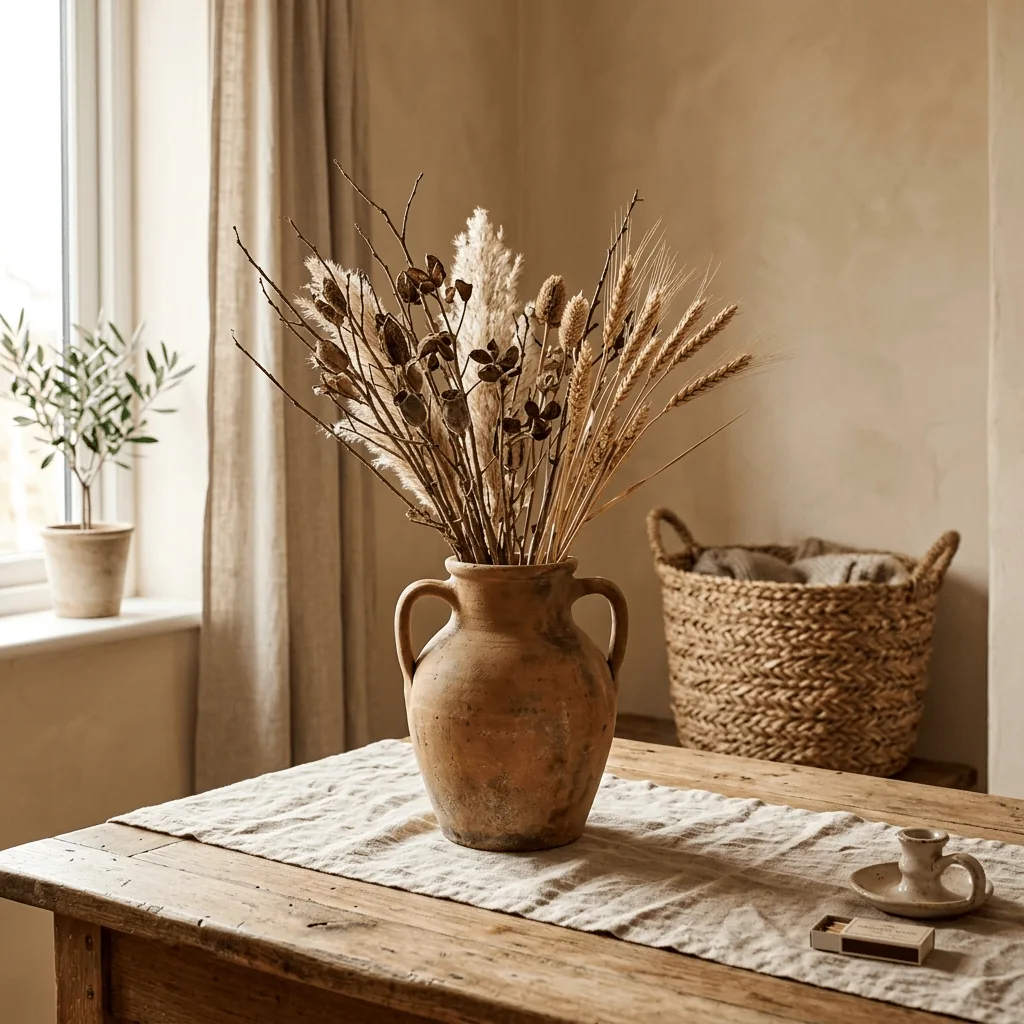
Terracotta is one of the oldest decorative materials and one of the hardest to use well in a modern home. The warm orange-brown clay reads immediately as rustic, earthy, and handmade — which is exactly what a neutral room sometimes needs, and exactly what pushes a room too far if the rest of the scheme is already heavy with texture and warmth. Terracotta vase decor works when the vase is the warmest object in the room, not one of several competing for the same temperature.
I styled a console table last spring for a friend who had bought a handled terracotta jug at a flea market. Her living room was cream walls, oatmeal sofa, pale oak floor. The terracotta was the only object in the room with real colour, and it anchored the whole console immediately. We added three dried wheat stems and left it. The day she added a second terracotta pot and a woven tray, the console stopped looking calm and started looking themed. One piece was an accent. Two was a collection. Three was a craft fair.
That one-piece discipline is the thread running through this guide. For the broader principle of how a single well-chosen object finishes a room, see the quiet power of a single good vase. For styling a vase set rather than a single piece, our boho ceramic vase set guide covers the pairing logic.
Why Terracotta Works on a Farmhouse Shelf
Farmhouse shelves tend to sit in warm-toned rooms: exposed wood, linen textiles, woven baskets, cream or stone walls. Terracotta belongs to this material family because it is literally baked earth. The colour connects to wood, dried grasses, and natural fibre without needing to match anything precisely.
The texture does work too. Unglazed terracotta has a matte, slightly rough surface that absorbs light rather than reflecting it. In a room with glossy surfaces — glass, chrome, polished stone — that absorption is calming. In a room already full of matte textures, it can disappear. Read the room before committing: terracotta adds the most value where it introduces a surface quality the room does not already have.
Handled vases (amphora shapes, jug forms, urn styles) have a particular advantage on shelves. The handles create a wider silhouette at the midpoint, which fills horizontal space without needing a larger vase. A 20 cm handled vase can occupy the same visual width as a 25 cm cylinder, which matters on shelves where depth is limited.
Choosing the Right Scale
Terracotta comes in every size from a 10 cm pot to a 70 cm floor urn. The right size depends on the surface.
| Surface | Vase height range | Notes |
|---|
| Floating shelf (15–20 cm deep) | 15–25 cm | Keep the vase shorter than the shelf is deep to avoid a top-heavy look |
| Console table | 20–35 cm | The vase should be one-third to one-half the height of any wall art or mirror above |
| Mantelpiece | 20–30 cm | Leave clearance to the shelf above; avoid blocking the focal point |
| Floor beside furniture | 40–60 cm | Needs enough height to read as intentional, not dropped |
| Entryway table | 20–30 cm | Scale to the table width; a small vase on a wide table looks stranded |
For shelf styling specifically, the most common mistake is choosing a vase that is too small. A 12 cm terracotta pot on an 80 cm shelf looks like a leftover. A 20–25 cm handled jug fills the role properly. The vase should feel proportional to the shelf, not apologetic.
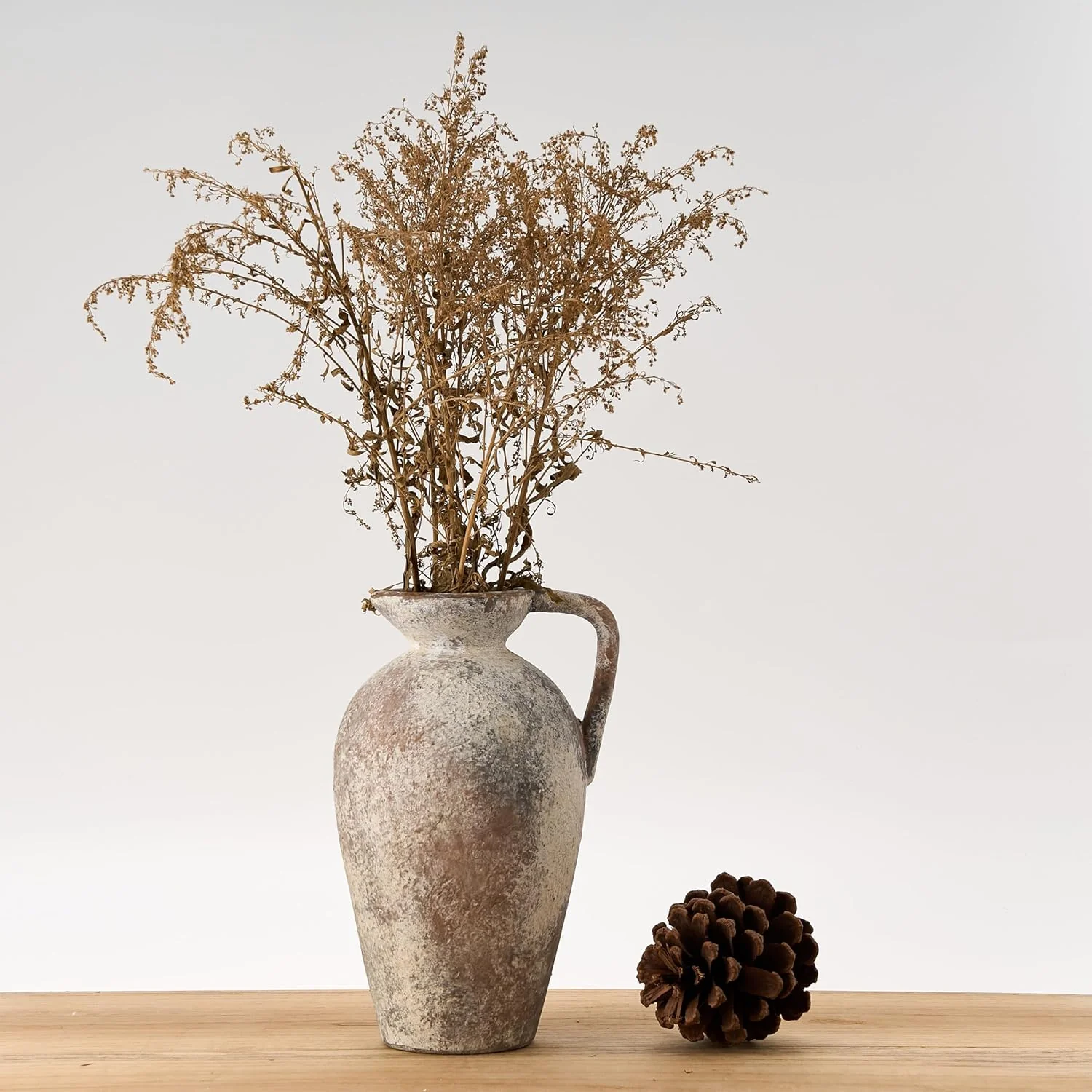
Luka Ceramic Rustic Farmhouse Vase
9.25 inch tall ceramic terracotta vase with handle, waterproof and leak-resistant with a rustic farmhouse and boho look.
Pairing with Other Shelf Objects
The rule of three works reliably: one tall object (the vase), one medium (a candle, a small framed print, a stack of two books), and one low and wide (a small bowl, a folded linen, a flat stone). Vary the heights and leave space between groups.
Terracotta pairs best with:
- Matte white ceramic — provides tonal contrast without colour competition
- Natural wood — extends the warm material family without matching exactly
- Woven baskets and linen — adds texture in the same warmth family
- Dried stems in neutral tones — wheat, pampas, eucalyptus, cotton branches
- Matte black metal — small bookends, candle holders, or frames create grounding contrast
Terracotta does not pair well with:
- Bright glazed ceramics — the gloss and colour clash with the matte earthiness
- Too many other terracotta pieces — the shelf starts to look like a pottery display
- Shiny metallics — polished gold, chrome, or mirror finishes next to rough clay create a jarring texture gap
Limit the shelf to one terracotta object. If the shelf is long enough for two groups, use the terracotta vase in one group and a completely different material — white ceramic, glass, or black metal — in the other. The terracotta anchors its zone; the other material anchors its zone. The shelf reads as curated rather than collected.
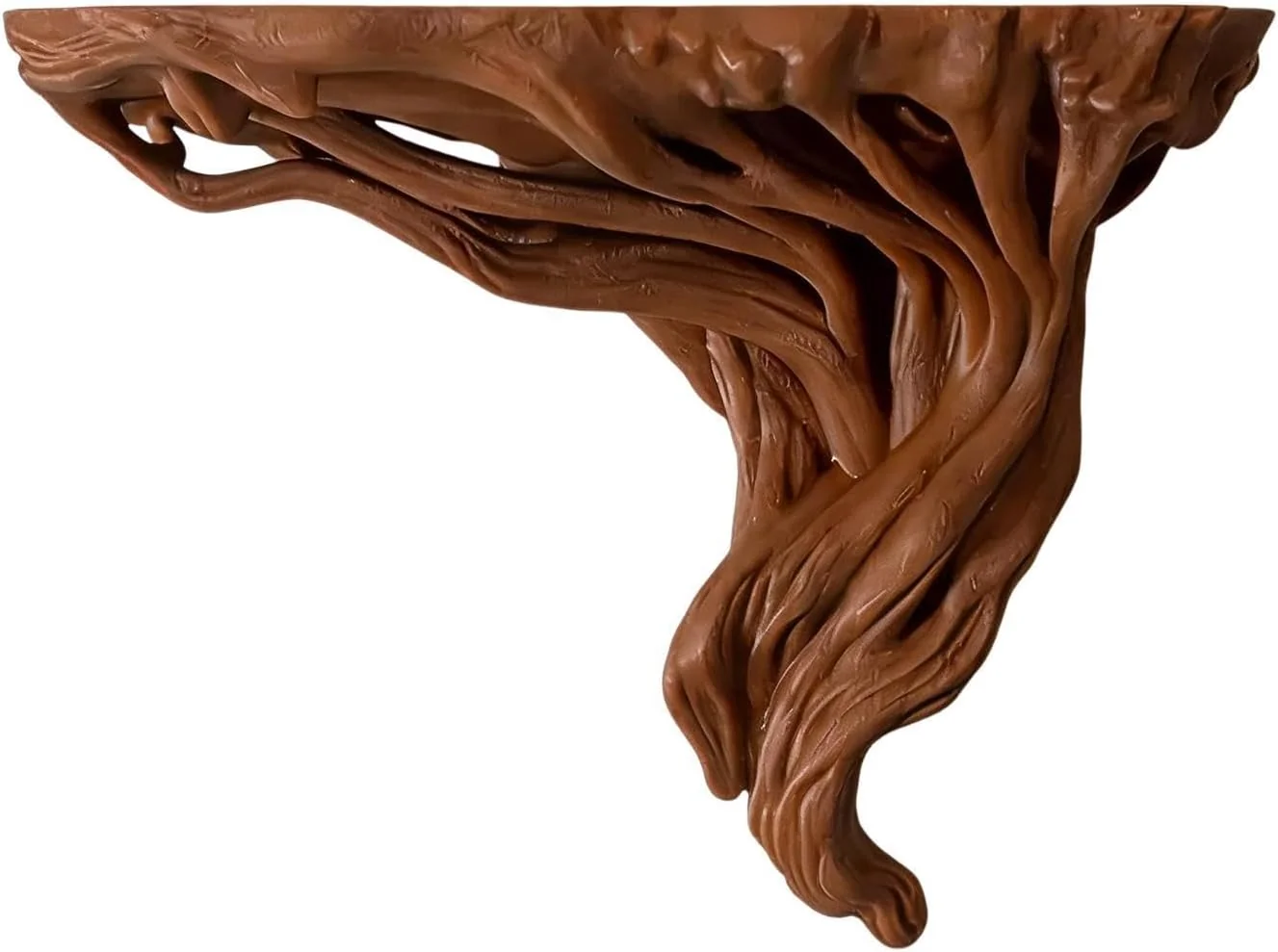
The shelf itself can reinforce the farmhouse warmth. An organic-form floating shelf — a rustic tree root style, for example — provides an irregular natural edge that complements the handmade quality of terracotta. The rough-meets-rough pairing works because both materials share an earthy, unpolished character.
Rustic Tree Root Floating Wall Shelf
Small 3D-printed tree-root style floating wall shelf for lightweight plant pots, keys, perfume, or decorative corner displays.
Dried Stems: The Right Fill
Terracotta and dried stems are a natural pair because the material and the contents belong to the same earthy palette. But the stems need restraint.
Quantity: Three to five stems is usually right. One stem looks sparse in a wide-mouth vase; ten stems turn the arrangement into a bouquet that hides the vase entirely. The vase should remain visible — its shape and colour are doing work.
Height: Stems should extend 15–25 cm above the vase rim. Much shorter and they sink into the opening. Much taller and they can make the arrangement top-heavy, especially on a shelf where the vase has no backstop.
Variety: Mix two to three types rather than using all of one. Wheat stalks plus a single pampas plume plus a few dried eucalyptus leaves creates movement. All pampas grass can look like a seventies revival. All wheat can look like a harvest display.
Colour: Stay within the warm neutral range — cream, tan, muted olive, sand. Dyed stems (bright pink, deep purple, electric blue) clash with terracotta’s natural warmth. If you want colour, add it elsewhere: a coloured book spine, a painted frame, a tinted glass candle holder. Let the vase zone stay earthy.
Entryway and Console Styling
Terracotta vases work especially well in entryways because the material signals warmth before anyone enters the main living space. The effect is immediate and low-maintenance — a terracotta jug with dried branches needs no water, no replanting, and no seasonal swap unless you want one.
On a console, position the vase off-center. A terracotta vase dead-center on a console looks symmetrical and staged. Placed one-third from the end, it creates an asymmetry that invites the eye to scan the rest of the surface. Add a small tray or book stack on the opposite side to balance the visual weight.
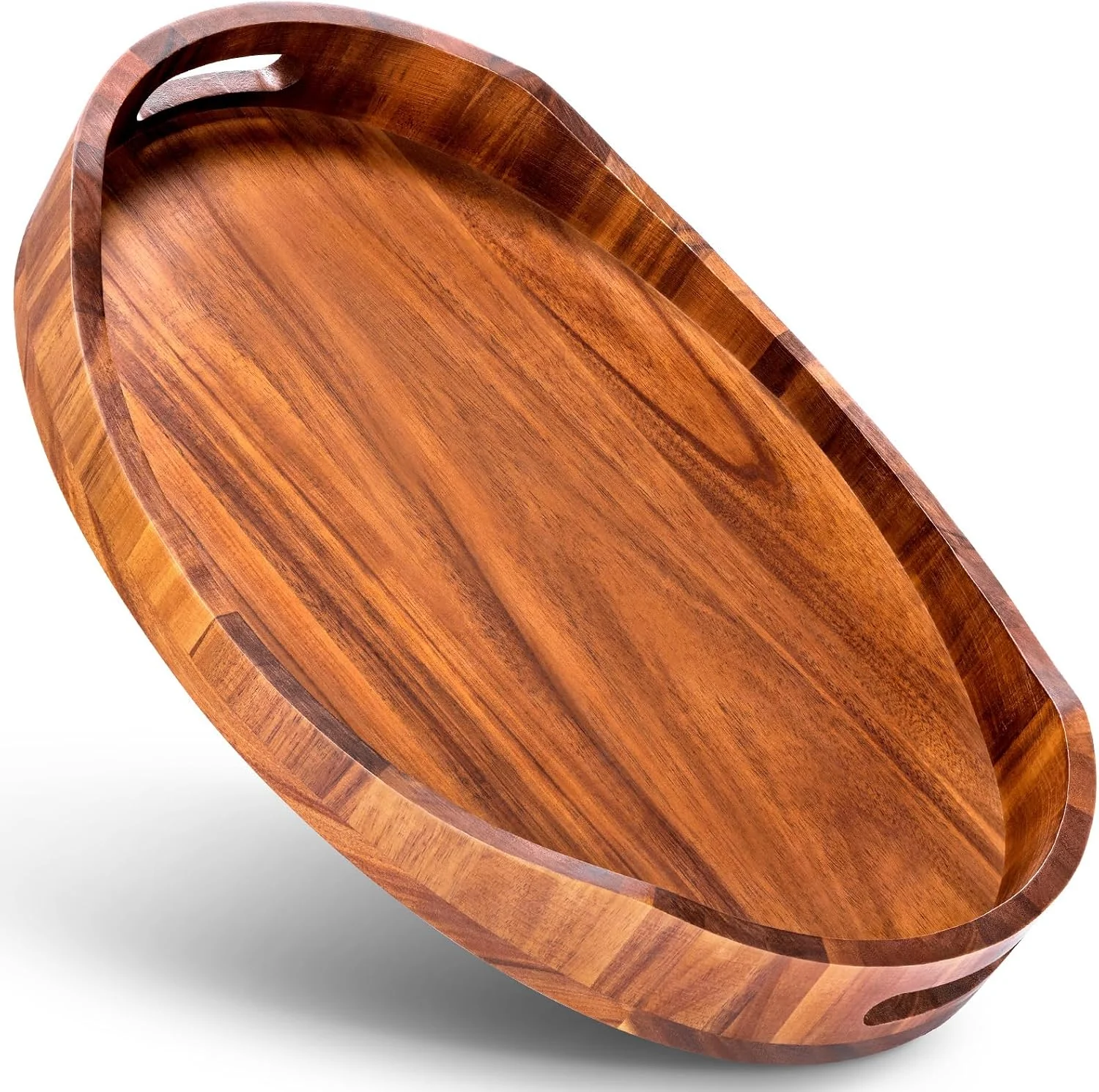
A natural wood tray on the opposite end of the console from the vase creates a clean pairing. The tray corrals keys, a small candle, or a bowl of stones — functional clutter that would otherwise spread across the surface. The acacia wood echoes the warmth of the terracotta without matching it, and the contained footprint keeps the console from looking busy.
HouseJoy Acacia Wood Serving Tray with Handles
16.5 x 13 inch acacia wood tray with handles for ottomans, coffee tables, breakfast in bed, bathroom styling, and candle displays.
If the console is in a hallway, check the vase from walking height and walking speed. You pass an entryway console quickly; the styling needs to read in a glance. Bold shape, single colour, minimal fill. A complicated arrangement that requires standing and studying defeats the purpose of entryway decor.
For related entryway furniture ideas, see our guide to the C-shaped wood console table.
Cleaning and Maintenance
Terracotta is durable but not indestructible. The clay is softer than stoneware and more porous than glazed ceramic.
Dusting: Wipe the exterior with a dry cloth weekly. The matte surface shows dust less than gloss, but the rough texture traps it. A soft paintbrush works for textured or handled areas where a cloth catches.
Water stains: If the vase held water — either from fresh flowers or from condensation — white mineral deposits may appear. Wipe with a cloth dampened in a 50/50 vinegar-water solution. For stubborn rings, let the vinegar sit for 30 minutes before wiping. Do not soak unglazed terracotta in water; it absorbs moisture and can develop mould inside.
Chips: Terracotta chips more easily than stoneware. If a chip happens on the rim, you can smooth it with fine sandpaper (220 grit) so it does not catch on fingers or fabric. The exposed clay will be a slightly different shade, which often adds to the rustic character rather than detracting from it.
Shelf protection: Place a cork disc, felt pad, or small coaster under the vase base. Unglazed terracotta bases can leave a faint orange ring on wood, painted surfaces, or light stone. The pad also prevents scratching if the vase gets nudged during cleaning.
Seasonal Shifts
A terracotta vase adapts to seasons with a simple stem swap rather than a full restyle.
- Spring: One or two fresh branches with buds, or a single stem of blossom. Keep the arrangement light.
- Summer: Switch to a single large green leaf (monstera, magnolia) or leave the vase empty. The clay reads cooler in summer when surrounded by less textile.
- Autumn: Dried wheat, bunny tails, or preserved autumn leaves. This is terracotta’s strongest season because the warm palette matches the light.
- Winter: One or two bare branches, or a small spray of dried berries. A candle beside the vase adds glow without adding clutter.
The discipline is to change the stems, not add more objects. One terracotta vase, one seasonal accent. The shelf stays quiet. For a broader take on seasonal decorating without overwhelm, see soft holidays decorating.
How to Use Terracotta Vase Decor at Home
Start with one vase on one surface. Place it where you will see it daily — a shelf you pass in the hallway, a console you face from the sofa, a kitchen ledge beside the window. Live with it for a full week before adding stems or companion objects. The vase alone should feel right. If it does not, the problem is scale or placement, not a missing accessory.
Check the material temperature of the room. Terracotta adds warmth. If the room is already layered with warm wood, warm textiles, and warm light, the vase may push the palette too far. In that case, pair it with one cool accent — a matte black candle holder, a grey linen, or a white ceramic dish — to rebalance the zone.
Add stems after the vase has settled. Choose fewer stems than you think you need. Stand at the doorway and check if the arrangement reads cleanly. If you can’t identify each stem from three metres away, the arrangement is too dense. Pull one or two stems and check again.
Use the one-in, one-out rule: for every object the terracotta vase replaces on the shelf, do not add it back elsewhere. The vase earns its place by simplifying the surface. If the shelf had five small objects and now has one vase plus three stems, the room is calmer. If the shelf had five objects and now has one vase plus five rearranged objects, nothing has changed.
FAQ
Does terracotta clash with modern or minimalist rooms?
Not if you choose a simple form. A clean-profile terracotta vase without heavy texture or ornament reads as an earthy accent in a modern room. Keep it to one terracotta piece per surface and surround it with matte white, black, or neutral linen to prevent the room from tipping rustic.
Can terracotta vases hold water?
Unglazed terracotta is porous and will absorb water, which can cause sweating, mineral staining, and eventual crumbling. Use a glass or plastic liner inside the vase for fresh flowers, or stick to dried stems. Glazed terracotta holds water safely.
How do I prevent terracotta from staining a wood shelf?
Place a cork pad, felt disc, or small plate under the vase. Unglazed terracotta can transfer a faint orange-brown ring onto light wood, especially if moisture is involved. The pad also prevents the rough base from scratching the shelf surface.
What dried stems look best in a terracotta vase?
Wheat, dried bunny tails, pampas grass, cotton branches, and eucalyptus all work well. Choose stems in cream, tan, or muted green to stay within the warm palette. Avoid dyed bright colors — terracotta is already a strong warm tone and needs quiet accompaniment.