Featured in this article
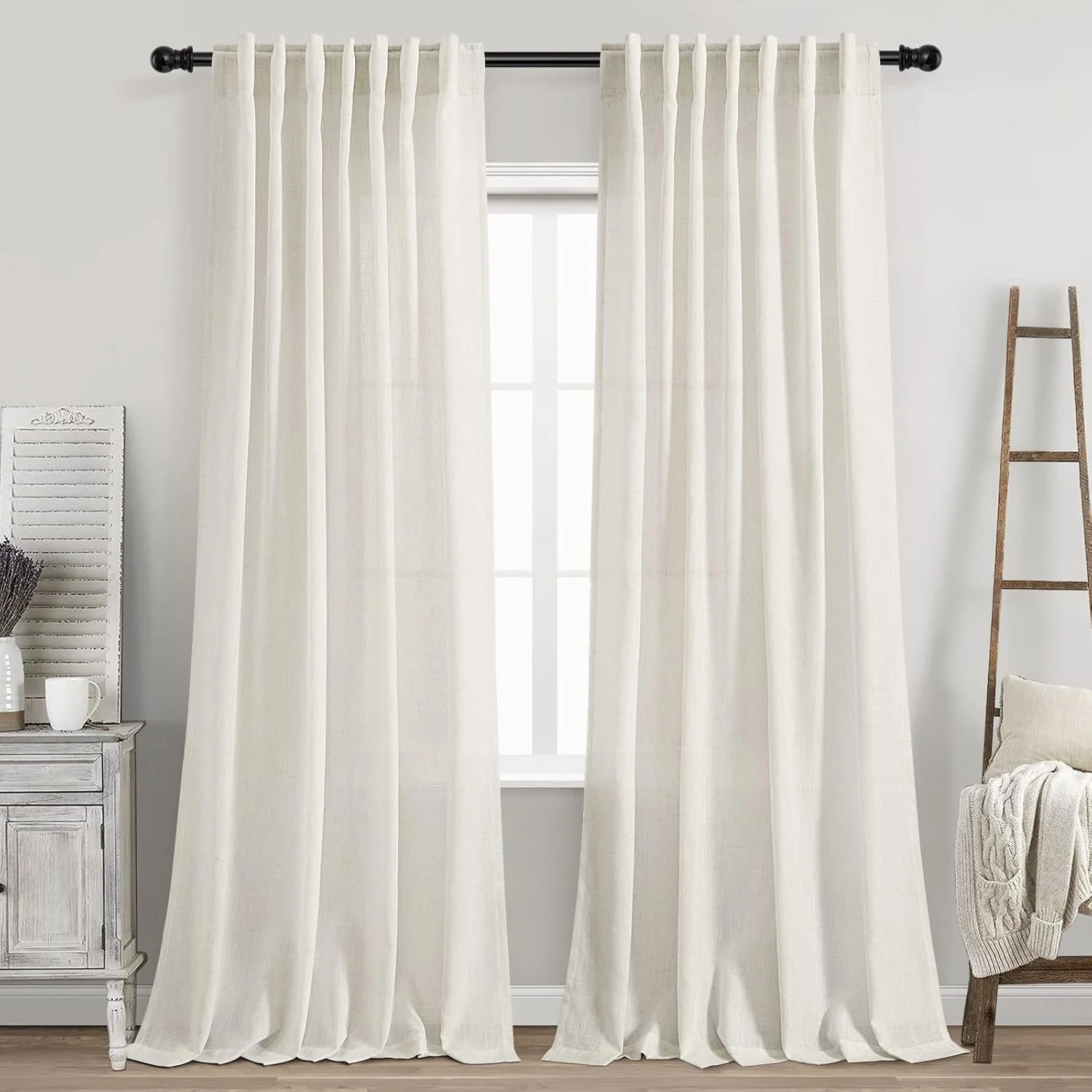
Cream Linen Back Tab Curtains, 84 Inch
Two-panel set of 84 inch natural ivory linen drapes with back tabs, a semi-sheer privacy weave, and a relaxed farmhouse pleated look.
Home Decor · Interior Inspiration · Style Guides
Cream linen curtains soften a living room with filtered light, but the length, fullness, and hanging height decide whether they look finished.
Two-panel set of 84 inch natural ivory linen drapes with back tabs, a semi-sheer privacy weave, and a relaxed farmhouse pleated look.
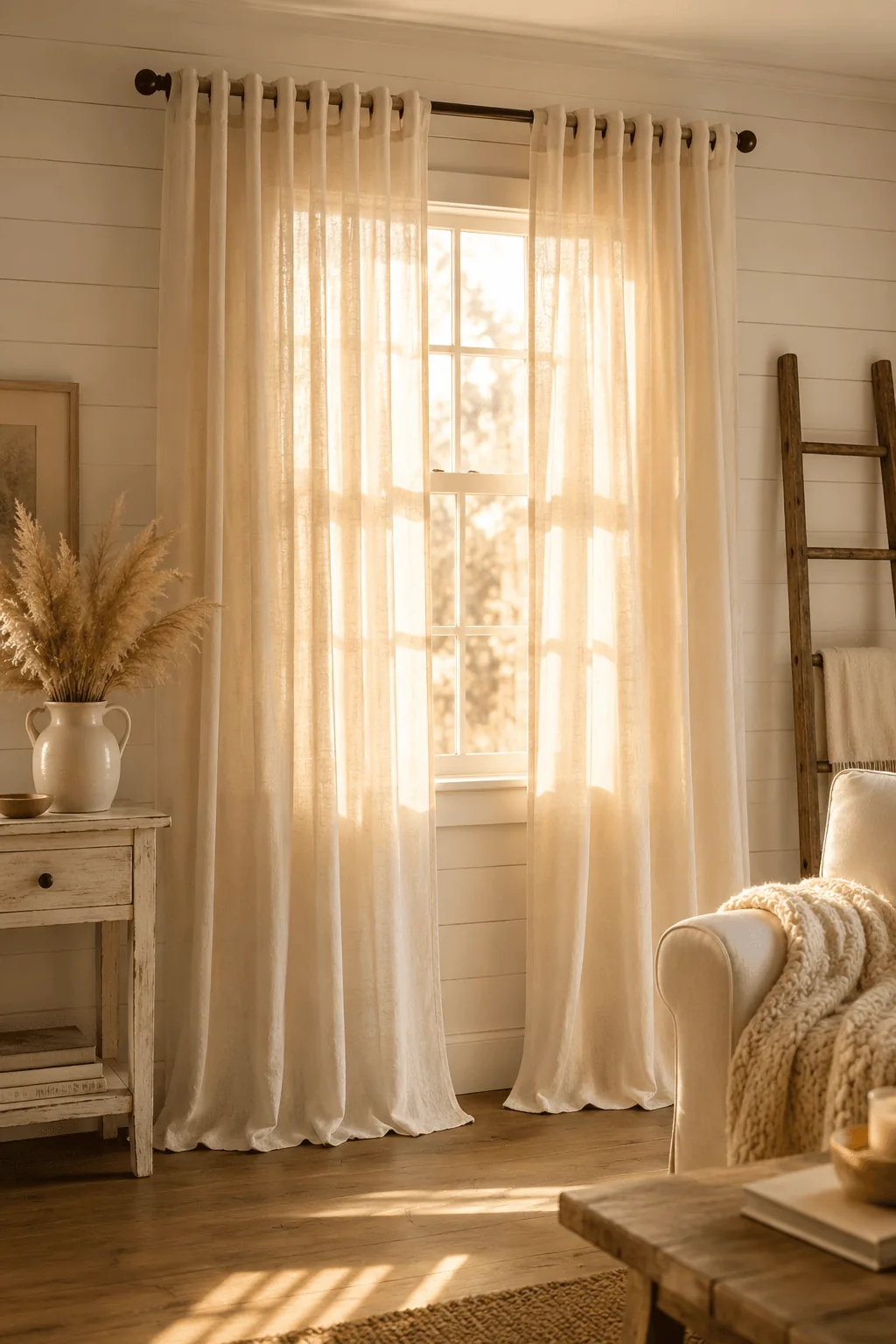
Cream linen curtains are one of the most transformative textile investments you can introduce to a living room. In modern home design, living rooms are frequently dominated by rigid, reflective materials: flat drywall partitions, hardwood or laminate planks, glass coffee tables, and hard electronic screens. Introducing full-length drapery in an unbleached cream linen blend introduces visual softness, improves room acoustics, and diffuses direct midday sun into a warm, flattering glow that makes the entire room feel lived-in and serene.
Yet choosing window treatments involves far more than simply selecting an appealing swatch. An 84-inch curtain panel is one of the most widely manufactured sizes in home decor, but whether an 84-inch panel looks custom-tailored or noticeably ill-fitted comes down to three non-negotiable variables: hanging height, stacking width, and fabric fullness. Understanding how these proportions interact with your ceiling height ensures your living room windows look expansive and finished rather than hastily assembled.
The single most common decorating mistake is purchasing curtains based on window glass height rather than total floor-to-rod elevation. Window casings vary widely, but standard residential ceiling heights across North American homes generally fall around 8 feet (96 inches).
Here is how the numbers work in a standard 8-foot room:
This makes the 84-inch curtain panel the ideal proportion for standard 8-foot rooms. However, measuring accurately requires measuring from the exact point where the fabric hangs to the floor surface. If you hang curtains via back tabs or a rod pocket, the fabric header rises slightly above the rod; if you use drapery rings with clips or eyelets, the curtain panel drops 1 to 2 inches below the rod. Always measure after your brackets are mounted or firmly held against the wall to verify where the bottom hem will land.
When hanging linen curtains in an active living room, you have three primary floor-contact styles:
Two-panel set of 84 inch natural ivory linen drapes with back tabs, a semi-sheer privacy weave, and a relaxed farmhouse pleated look.
To make a standard living room feel taller and brighter, never mount your curtain brackets directly against the outer edges of the window casing. Mounting a rod flush to the window frame boxes the window in, shrinks the apparent height of the wall, and forces the gathered curtain panels to cover valuable window glass when pulled open, blocking natural light.
Follow the High and Wide mounting strategy:
For rooms where the window wall is the central architectural feature, explore our layout strategies in living rooms that do not compete with the window.
Curtains must look rich and structured even when drawn completely shut. A flat sheet of fabric pulled taut across a window casing looks like a bedsheet hung as an afterthought. To achieve elegant, tailored pleating, you must calculate fullness.
The standard fullness multiplier is 1.5x to 2x the width of your window:
If you are interested in creating your own tailored panels with custom header tape or weights, see our step-by-step DIY linen curtain guide.
The construction of the curtain header determines how the fabric drapes and moves along the rod. While traditional pinch pleats can feel formal and basic rod pockets bunch stubbornly when opened, back tab curtains strike the ideal balance between casual charm and tailored structure.
Along the backside of the top hem, hidden fabric loops are spaced at regular 4- to 5-inch intervals. When you thread a 1-inch or 1.25-inch metal or wooden drapery rod through these tabs, the fabric naturally folds forward into uniform vertical accordion waves. The front face remains completely clean and seamless—no visible clips, no dangling rings, and no messy pocket bunching.
If you plan to draw the curtains open and closed multiple times each day, ensure your curtain rod has a smooth, satin or matte finish so the fabric tabs glide effortlessly without snagging on bracket joints or telescoping seam transitions.
True cream is a nuanced neutral. Unlike bright optical white—which can cast cold blue or stark clinical shadows in northern exposures—cream carries subtle yellow, beige, or warm stone undertones. This warmth enables cream linen to bridge the gap between crisp modern architectural elements and rustic vintage furniture.
To build a harmonious living room palette around cream linen drapery:
Linen is prized for its organic, slightly textured slub weave, but packaged curtains arrive with stiff packing folds that will not drop out on their own.
By respecting the 84-inch measurement formula, installing your rod high and wide, and ordering sufficient panel fullness, cream linen curtains will soften your living room architecture, frame your windows beautifully, and bathe your home in warm, natural light for years to come.