Featured in this article
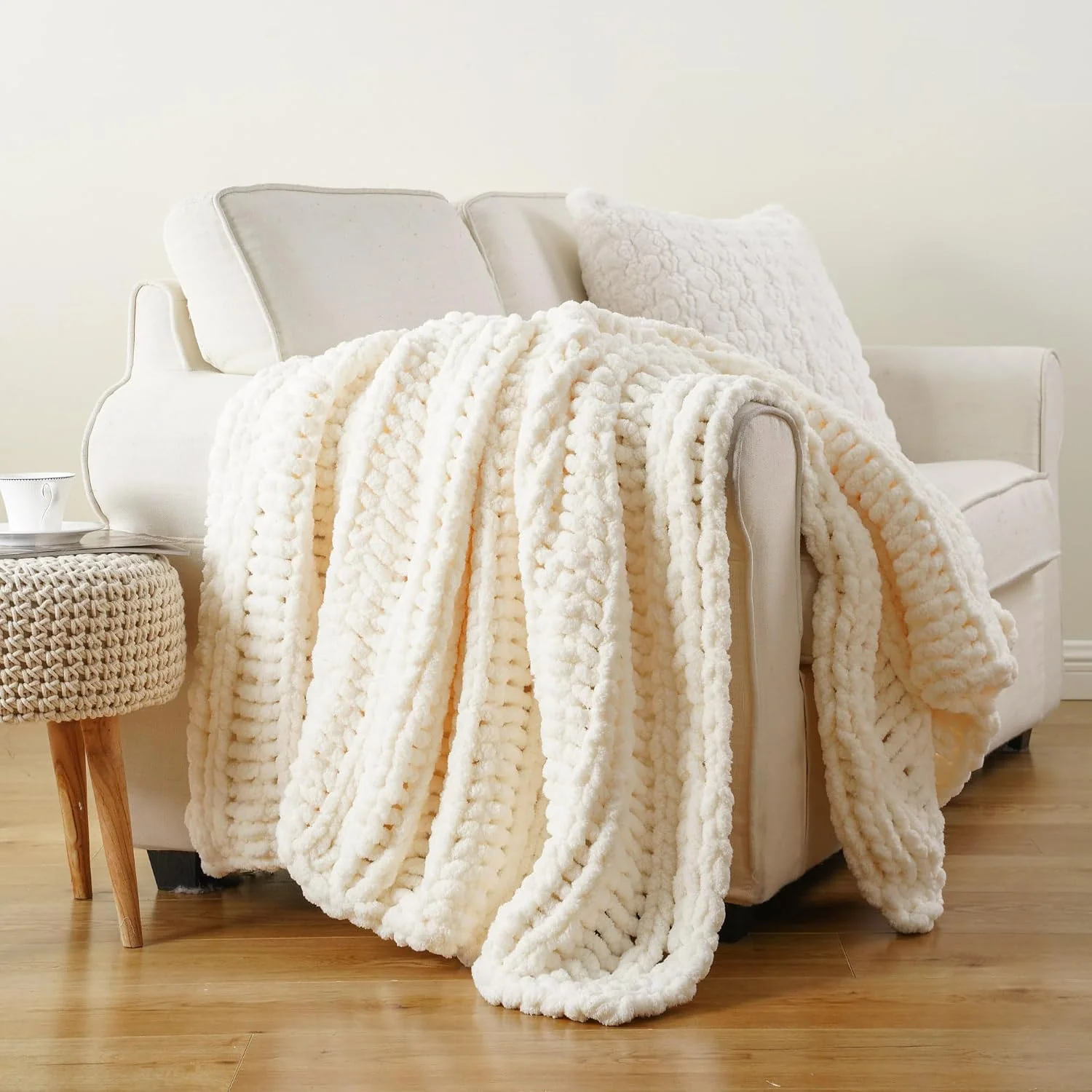
Battilo Chunky Knit Throw Blanket
Battilo Chunky Knit Throw Blanket for Couch, 100% Hand Made Chenille, Super Soft Warm Cozy Cream Blanket, 50"x60"
Home Decor · Interior Inspiration · Style Guides
Soft holiday decorating works best when sizing, placement, light, and material are planned together so the room stays calm, useful, and easy to maintain.
Battilo Chunky Knit Throw Blanket for Couch, 100% Hand Made Chenille, Super Soft Warm Cozy Cream Blanket, 50"x60"
The temptation around any holiday is additive: garlands on top of mantel decor on top of everyday accessories on top of a rug. By the time the day arrives, the room is exhausting. This soft holiday decorating guide keeps the focus on proportion, maintenance, and how the room feels in daily use.
In our room edits, the change works only when it solves a visible problem instead of adding another layer to manage. Use the same restraint behind Sunday-night reset and single good vase: measure first, repeat materials deliberately, and leave enough blank space for the change to read.
The first holiday-decor decision is what to take down. Move at least three everyday objects off-stage for the season. The empty surfaces are the canvas; the new pieces stand out only because they’re the only thing there.
For this choice, this section matters most when it is checked from the doorway and from the seat or counter where the decision will be seen every day. Give the idea at least 24 hours in normal morning and evening light, then remove one nearby object before deciding whether the room needs anything else.
A single texture — eucalyptus, pinecones, beeswax candles, dried orange — repeated across the dining table, the mantel, and one bowl in the kitchen reads as design. Three different motifs read as a craft store. Pick the one you like best and let it carry.
The whole brief: less stuff, applied with conviction.
For this choice, this section matters most when it is checked from the doorway and from the seat or counter where the decision will be seen every day. Give the idea at least 24 hours in normal morning and evening light, then remove one nearby object before deciding whether the room needs anything else.
Two pillar candles will out-decorate a string of fairy lights every time. Real flame, low height, and 2700K-ish bulbs everywhere else. The room glows on its own; you didn’t have to drape it.
For this choice, this section matters most when it is checked from the doorway and from the seat or counter where the decision will be seen every day. Give the idea at least 24 hours in normal morning and evening light, then remove one nearby object before deciding whether the room needs anything else.
The fastest way to ruin a holiday aesthetic is to leave it up two weeks past the day. Same evening as the dinner, repack everything into a single labelled box. Future-you will be grateful, and the room snaps back to its calm self.
For this choice, this section matters most when it is checked from the doorway and from the seat or counter where the decision will be seen every day. Give the idea at least 24 hours in normal morning and evening light, then remove one nearby object before deciding whether the room needs anything else.
Not every room needs holiday decor. Pick one primary room and one small secondary moment. For most homes, that means the dining table or living room carries the season, and the entry table gets a smaller echo. Bedrooms, bathrooms, and every shelf in between can stay normal.
This restraint makes the decorated room feel more special. If every surface has a seasonal object, the whole house gets louder and no single moment matters. If the dining table has beeswax candles, linen napkins, and one branch arrangement, the ritual has a clear center.
The calmest holiday rooms use materials that already belong in a home: beeswax, linen, stoneware, brass, wool, evergreen, dried citrus, paper, and wood. Plastic glitter, high-shine ribbon, and novelty objects can be fun, but they dominate quickly. Use them only if they are genuinely part of your tradition, not because the season seems to demand more.
Colour works the same way. Choose one seasonal accent and repeat it against your existing palette. Deep red with warm neutrals, forest green with oak, white paper with brass, dried orange with linen. The room should still look like your room after the decoration arrives.
Battilo Chunky Knit Throw Blanket for Couch, 100% Hand Made Chenille, Super Soft Warm Cozy Cream Blanket, 50"x60"
For a dining table, we use three layers: textile, low light, natural texture. A runner or folded linen down the center, two to four low candles, and one natural element is enough. Keep everything below eye level so conversation can cross the table.
If you host children, pets, or a crowded meal, skip tall arrangements entirely. Use a wide bowl of dried citrus, pinecones, walnuts, or paper ornaments instead. It gives the same seasonal signal without becoming an obstacle course.
Before buying anything new, decide where it will live for the other eleven months. If the answer is “somewhere,” do not buy it. A calm seasonal collection fits into one labelled box per holiday. That limit forces better choices and makes next year easier.
Photograph the finished setup before you pack it away. Next year, you can recreate the parts that worked and skip the rest. Holiday decorating gets calmer when it becomes a small repeatable system rather than an annual reinvention.
Buy consumables first: candles, paper, greenery, dried citrus. Then buy textiles, because napkins and runners can work beyond one date. Buy themed objects last. The more specific the object, the harder it has to earn its storage space.
For a less seasonal version of the same idea, the Sunday-night reset uses a similar principle: a small ritual, repeated consistently, does more than a dramatic overhaul.
The best test is whether the room still feels like itself with the decorations in place. If the answer is no, remove the newest thing first. Seasonal style should tune the house, not replace its personality for a month.
Start with measurements rather than mood. Mark the likely footprint with painter’s tape, books, or a folded towel before buying or rearranging anything. A useful rule is to leave at least 60 cm for a main walkway, 35-45 cm between a sofa and coffee table, and 10 cm of visible border around small textiles or objects that sit on the floor. Those numbers are not decorative; they decide whether the idea feels calm once people actually move through the room.
Check the material against what is already present. If the room has several glossy surfaces, add matte texture. If it has many pale fabrics, add one grounded wood, stone, black, or brass note. If it already has strong contrast, keep the new piece quieter. The goal is not to match every finish, but to repeat one material family so the choice feels connected to the room instead of dropped into it from a product photo.
Plan maintenance before styling. Anything near water, food, pets, children, or direct sun needs a cleaning rhythm and a tolerance for wear. Soft textiles may need weekly washing, stone may need coasters, acrylic may need microfiber cleaning, wood may need pads under objects, and lighting may need a dimmer that is compatible with the fixture. A beautiful choice that is annoying to maintain usually becomes visual clutter within a month.
Use the one-in, one-out test after the change lands. Add the new piece, then remove one smaller object in the same sightline. If the room feels more intentional, leave the smaller object out. If the room feels bare, return it after a week. This keeps the edit from turning into accumulation and protects the calm that made the change worth considering in the first place. Used this way, soft holiday decorating becomes part of the room’s structure rather than a loose accent.
Use the change as one clear decision, then remove or quiet the nearest competing object. The room should gain a job, a material note, or a focal point rather than another small thing to maintain.
Measure the available width, depth, height, and the walkway that remains after the piece or idea is in place. For most rooms, 60 cm of clear passage and visible breathing room around the object prevents a styled choice from becoming an obstacle.
Yes, if the choice is reversible and scaled to the room rather than the product photo. Freestanding pieces, textiles, plug-in lighting, removable hooks, and careful styling usually give the best result without changing the building.
The common mistake is treating the idea as decoration before checking proportion and maintenance. If the size is wrong or the material is hard to live with, even an attractive choice will make the room feel less settled over time.