Featured in this article
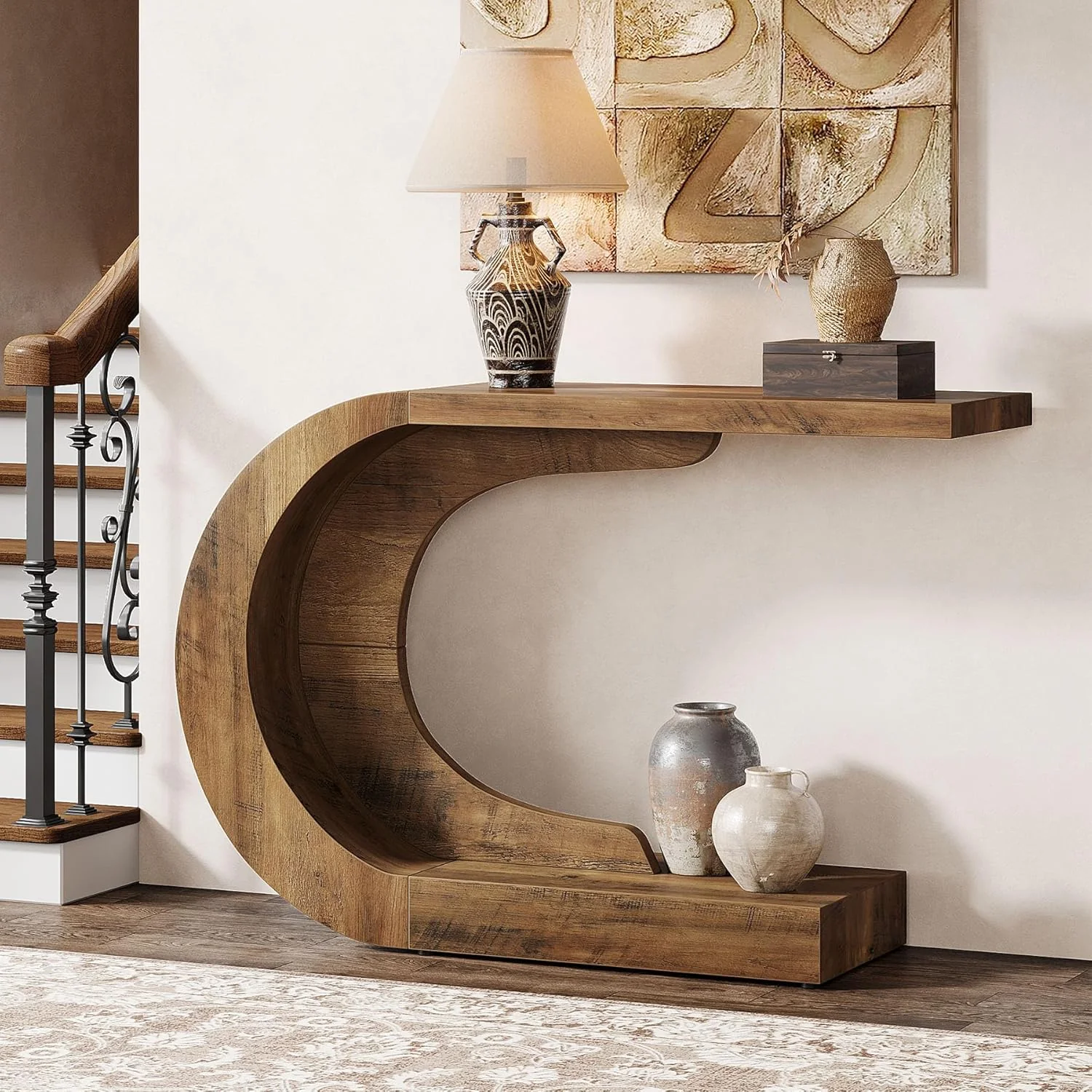
Tribesigns C-Shaped Console Table
Tribesigns 43.3" Mid-Century Modern Console Table for Entryway, Wood C-Shaped Hallway Entry Accent Table for Living Room, Brown
Home Decor · Interior Inspiration · Style Guides
C-shaped console table works best when sizing, placement, light, and material are planned together so the room stays calm, useful, and easy to maintain.
Tribesigns 43.3" Mid-Century Modern Console Table for Entryway, Wood C-Shaped Hallway Entry Accent Table for Living Room, Brown
The entryway is usually too narrow for real furniture and too visible to ignore. A C-shaped console table works because it gives the wall a finished edge while keeping the base visually open.
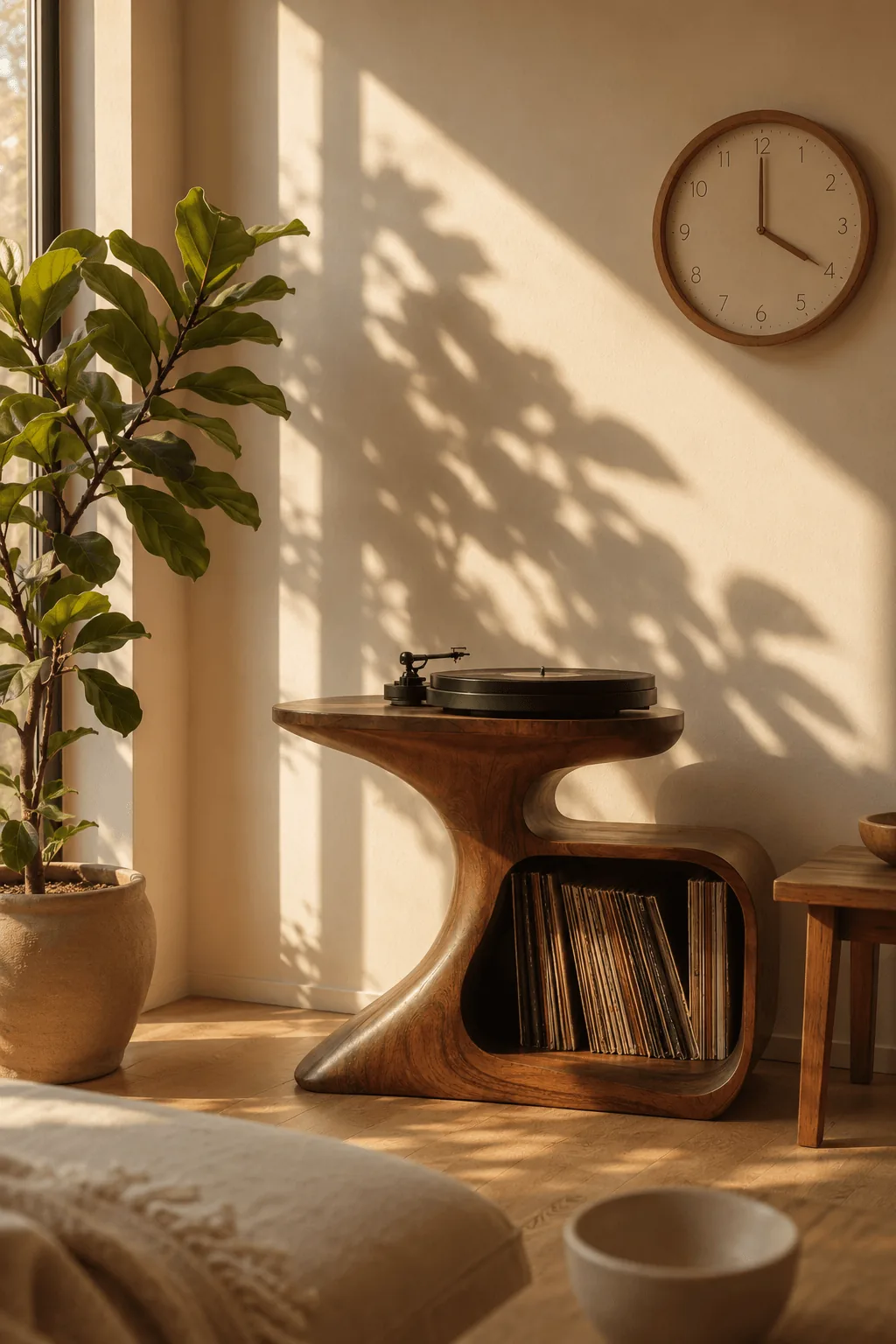
In our room edits, the change works only when it solves a visible problem instead of adding another layer to manage. Use the same restraint behind walnut record player stand storage and five accessories that do the work of a redesign: measure first, repeat materials deliberately, and leave enough blank space for the change to read.
The curved side softens a hallway full of doors, frames, and straight lines. In warm wood, it also makes the first view into the home feel calmer.
Use this kind of console in an entry, behind a sofa, along a short hallway, or beside a dining area that needs a small landing surface. It is best when the room needs a place for keys, a lamp, or a vase, but not a full cabinet.
If the route is narrow, measure the walking path with the table in place. A beautiful console that catches hips or bags every day is the wrong console.
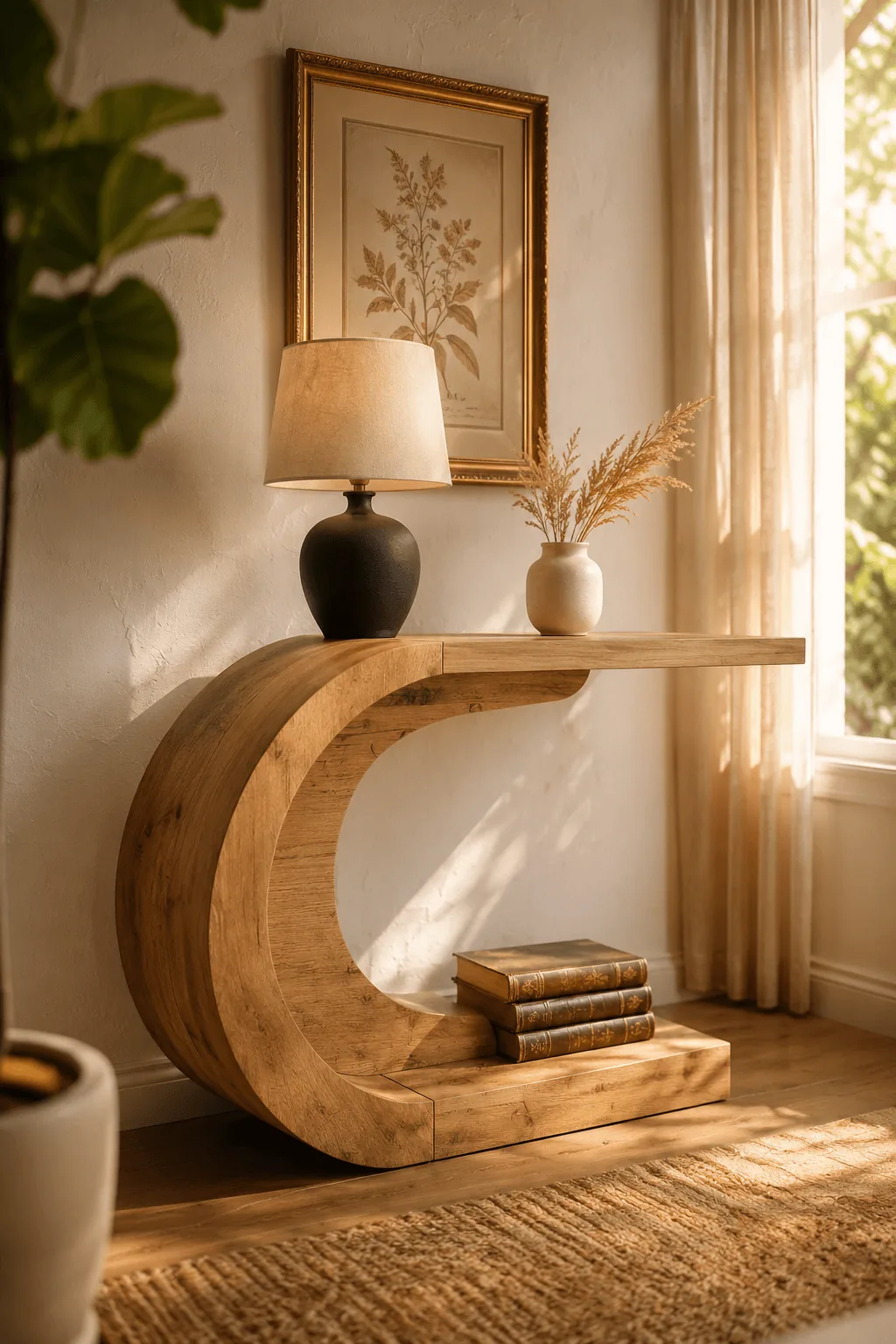
Use three layers: lamp, vertical object, low stack. A black or ceramic lamp gives function. A vase or branch adds height. A small book stack or tray catches the everyday items.
Keep the lower shelf edited. One basket, one stack of books, or one sculptural object is enough. Filling the bottom makes the open shape feel heavy.
Natural wood is forgiving in an entry because it hides small marks better than glossy lacquer. It also pairs well with black accents, woven baskets, stoneware, and cream walls.
If the table is very warm, avoid adding too many orange or brass pieces nearby. Let the wood carry the warmth and use black, linen, or ceramic to balance it.
Tribesigns 43.3" Mid-Century Modern Console Table for Entryway, Wood C-Shaped Hallway Entry Accent Table for Living Room, Brown
Check depth, height, and stability. A console should be narrow enough for the route, tall enough to use without bending, and stable enough that a lamp does not wobble when the table is brushed.
For this choice, this section matters most when it is checked from the doorway and from the seat or counter where the decision will be seen every day. Give the idea at least 24 hours in normal morning and evening light, then remove one nearby object before deciding whether the room needs anything else.
Measure the narrowest part of the route, not the widest wall. Doors swing, bags move, people turn, and shoes collect exactly where the floor plan looked clear. A console that projects too far will make the entry feel smaller every time you come home.
As a rule, keep a comfortable walking path in front of the table. If the hallway is very narrow, choose a shallow console and rely on height rather than depth for presence. A taller lamp, branch arrangement, or mirror above the table can give the same finished feeling without stealing floor space.
An entry console should handle the things that actually arrive with you: keys, sunglasses, mail, dog lead, gloves, or a small bag. If the table only holds decorative books and a vase, it may photograph well but fail the daily test.
Use one tray or bowl for loose objects. Without a catch-all, the whole surface becomes the catch-all. The bowl should be good-looking enough to stay out and shallow enough that keys do not disappear.
A mirror makes sense when the entry needs light or a final check before leaving. Art makes sense when the opposite wall or view is not worth reflecting. If the mirror only doubles a blank wall or a pile of shoes, choose art instead.
For a C-shaped console, a round or arched mirror can echo the curve without making the whole arrangement too literal. If the table is already very sculptural, a simple rectangular frame may be the calmer choice.
The lower shelf is useful, but it should not become a second junk surface. Use it for one basket, one stack, or one substantial object. Shoes are better on a dedicated rack unless the console was designed for them.
If the lower shelf is visible from the living room, treat it as part of the styling. A woven basket can hide practical clutter while adding texture. Open piles of mail, chargers, and spare bags will make the entry feel unfinished.
Warm wood benefits from a small lamp. Entryways often lack natural light, and a lamp turns the console from storage into welcome. Choose a shade or bulb that gives warm light rather than a bright task beam.
If the table is near the front door, protect the surface. Water from umbrellas, keys, and bags can mark wood quickly. A tray, coaster, or matte protective finish keeps the piece from looking tired in the first month.
Start with measurements rather than mood. Mark the likely footprint with painter’s tape, books, or a folded towel before buying or rearranging anything. A useful rule is to leave at least 60 cm for a main walkway, 35-45 cm between a sofa and coffee table, and 10 cm of visible border around small textiles or objects that sit on the floor. Those numbers are not decorative; they decide whether the idea feels calm once people actually move through the room.
Check the material against what is already present. If the room has several glossy surfaces, add matte texture. If it has many pale fabrics, add one grounded wood, stone, black, or brass note. If it already has strong contrast, keep the new piece quieter. The goal is not to match every finish, but to repeat one material family so the choice feels connected to the room instead of dropped into it from a product photo.
Plan maintenance before styling. Anything near water, food, pets, children, or direct sun needs a cleaning rhythm and a tolerance for wear. Soft textiles may need weekly washing, stone may need coasters, acrylic may need microfiber cleaning, wood may need pads under objects, and lighting may need a dimmer that is compatible with the fixture. A beautiful choice that is annoying to maintain usually becomes visual clutter within a month.
Use the one-in, one-out test after the change lands. Add the new piece, then remove one smaller object in the same sightline. If the room feels more intentional, leave the smaller object out. If the room feels bare, return it after a week. This keeps the edit from turning into accumulation and protects the calm that made the change worth considering in the first place. Used this way, C-shaped console table becomes part of the room’s structure rather than a loose accent.
Use the change as one clear decision, then remove or quiet the nearest competing object. The room should gain a job, a material note, or a focal point rather than another small thing to maintain.
Measure the available width, depth, height, and the walkway that remains after the piece or idea is in place. For most rooms, 60 cm of clear passage and visible breathing room around the object prevents a styled choice from becoming an obstacle.
Yes, if the choice is reversible and scaled to the room rather than the product photo. Freestanding pieces, textiles, plug-in lighting, removable hooks, and careful styling usually give the best result without changing the building.
The common mistake is treating the idea as decoration before checking proportion and maintenance. If the size is wrong or the material is hard to live with, even an attractive choice will make the room feel less settled over time.