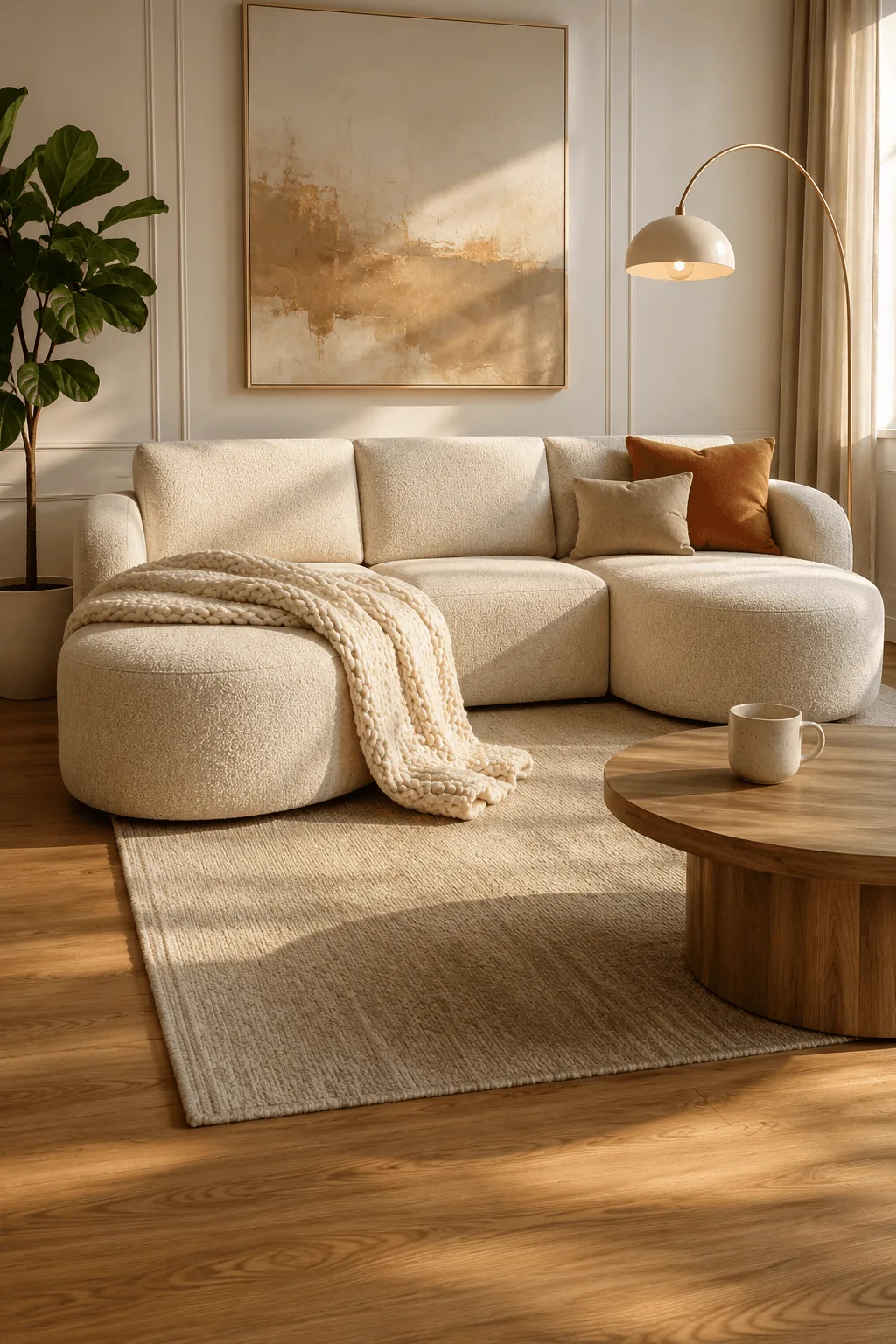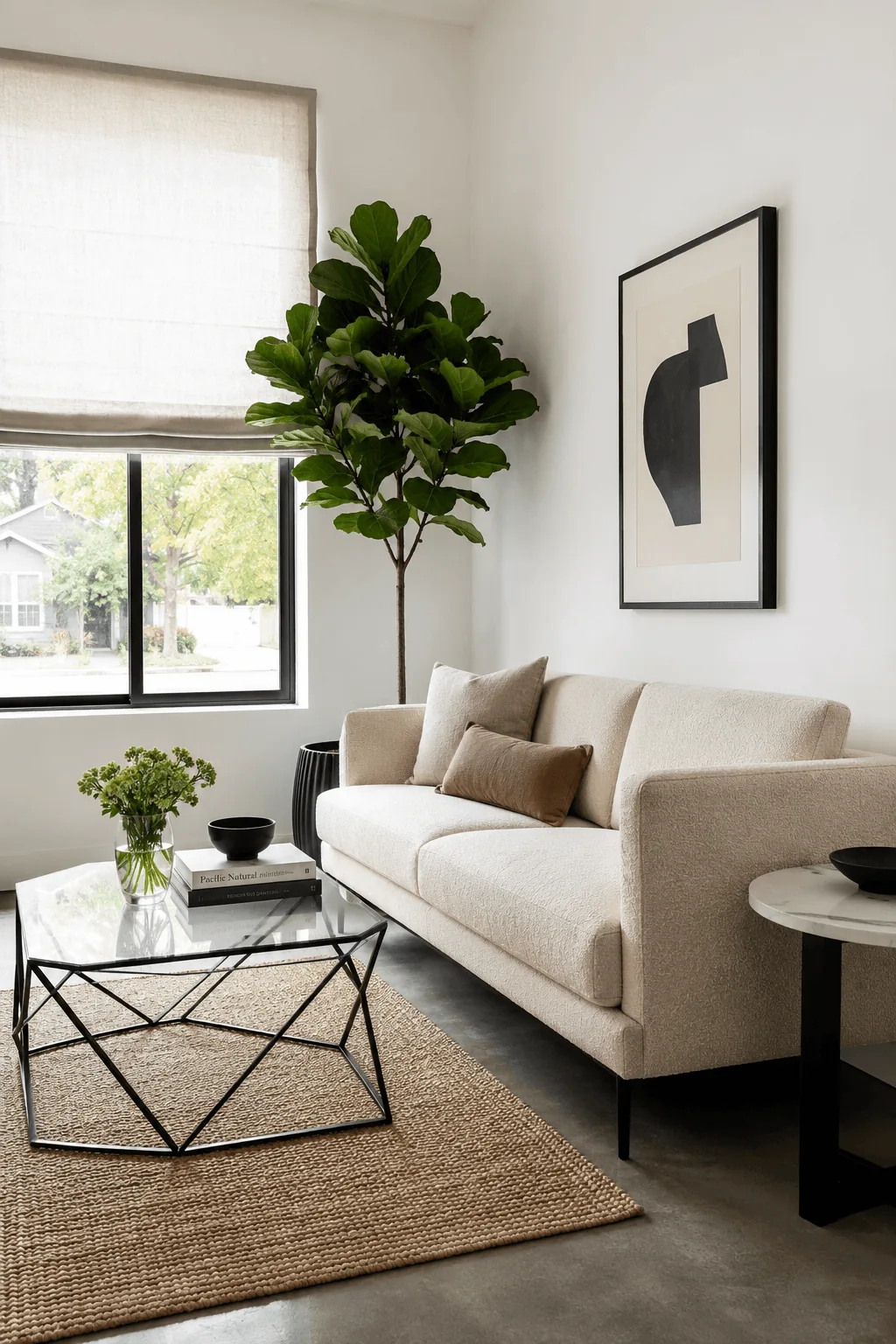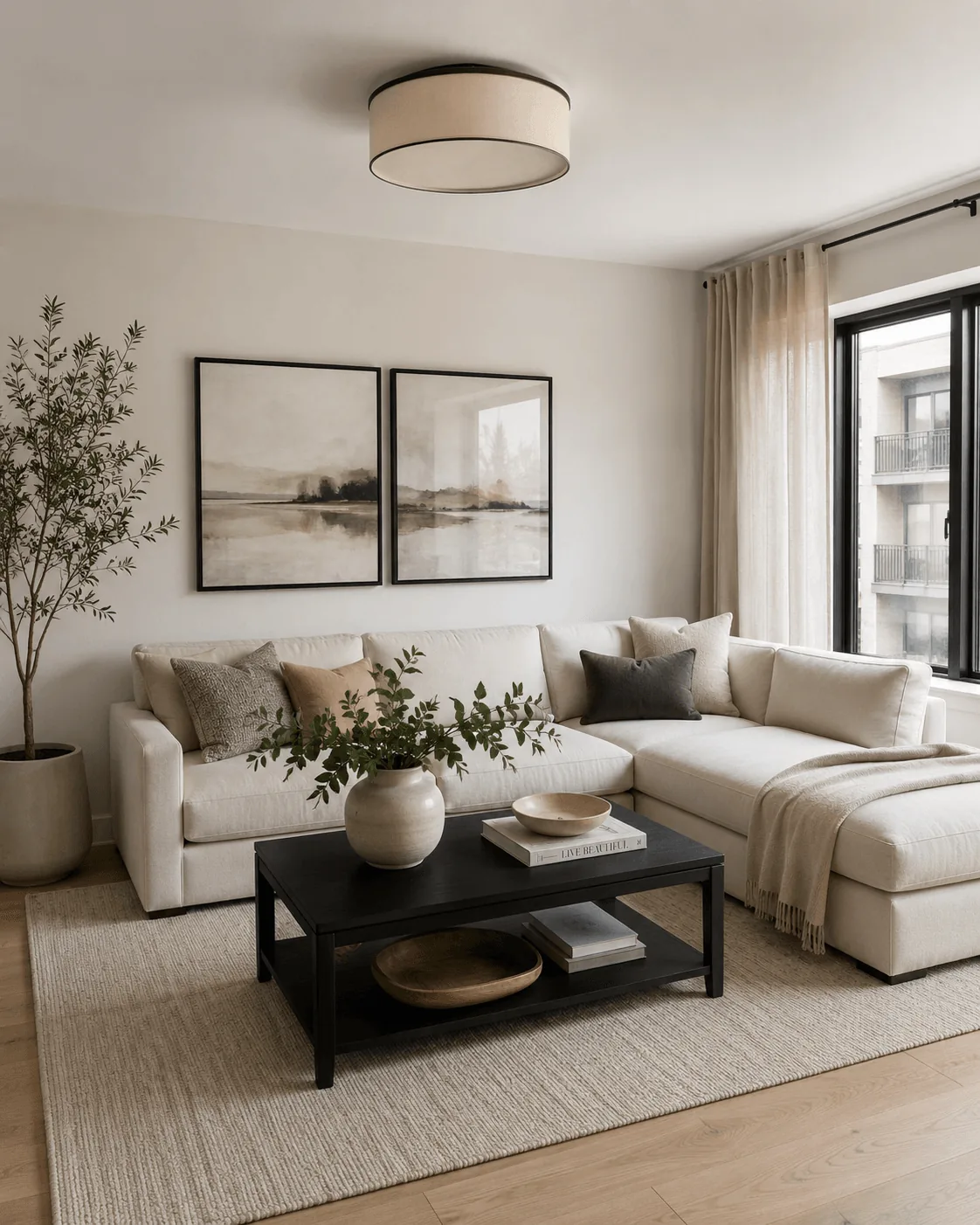
A sofa is the most-used object in most homes and the most often bought wrong. The trick is not which silhouette photographs well — it’s whether the frame is hardwood, the fabric is replaceable, and the cushions hold their shape after five years. This sofas that survive a real living room guide keeps the focus on proportion, maintenance, and how the room feels in daily use.
In our room edits, the change works only when it solves a visible problem instead of adding another layer to manage. Use the same restraint behind modern curved sofa living room ideas and travertine coffee table: measure first, repeat materials deliberately, and leave enough blank space for the change to read.
How we picked
A sofa survives a real living room when its frame, suspension, fabric, cushions, scale, and care route all match daily use. We scored each candidate in that order because failure starts underneath: a weak frame or vague suspension will matter long before the silhouette feels dated. The safest specification is kiln-dried hardwood, reinforced joinery, resilient webbing or springs, foam-core cushions with a softer wrap, and a removable tight-weave cover. We also checked whether the stated dimensions fit small rooms, whether cleaning instructions were realistic, and whether product copy named real materials rather than “linen look” or “wood effect.” These checks are repeatable before purchase. For family rooms, rentals, pets, and Sunday-film sofas, a beautiful piece that cannot be cleaned, entered through the door, or hold its cushion shape after repeat use did not make the shortlist.
We looked for three things, in this order:
- Frame. Kiln-dried hardwood with mortise-and-tenon joinery. No staples, no MDF.
- Cushion fill. A feather-and-down core wrapped over high-density foam — soft on contact, structured underneath.
- Cover. A removable, washable cover in a tight-weave linen, performance fabric, or natural cotton. Not microfibre.
Anything that flunked one of those three didn’t make the list, even if the price was tempting.
| What we checked | Pass signal | Red flag |
|---|---|---|
| Frame | Kiln-dried hardwood or clearly specified engineered hardwood | MDF, staples, or “wood effect” language |
| Suspension | Sinuous springs, webbing, or named support system | No suspension detail in product copy |
| Cushions | Foam core with feather, down, fibre, or latex wrap | Down-only cushions for daily use |
| Fabric | Tight weave, removable cover, clear composition | ”Linen look”, loose boucle, or bonded leather |
| Scale | Seat depth and delivery route fit the actual room | Wall length measured but door/stair route ignored |
| Care | Washable cover, replaceable cushions, clear warranty | Spot-clean only on a family-room sofa |
The shortlist
We won’t enumerate all eight here in this short demo article — but the principle holds: budget for a frame that outlives the cushions, choose a cover you can wash, and resist the urge to pick the sofa that “matches” everything. A great sofa is the anchor of a room, not the wallpaper.
A sofa is the only piece of furniture that has to be comfortable, beautiful, and structural at the same time. Pay for two of those and accept that the third will be average.
What to skip
- Anything described as “modular” without specifying the connection hardware.
- Bonded leather. (It’s not leather.)
- Down-only cushions on a daily-use sofa — they collapse.
The right sofa makes a living room feel like a room you live in. The wrong one makes you tidy around it forever.
This final check is deliberately practical: look at the section from the doorway, then again from the place where you use the room most often. If the idea only works from one angle, simplify the surrounding objects before you add anything else.
The questions to ask before buying
Ask what the room actually asks of the sofa. Does it need to seat four adults every evening, survive children, hold up to pets, double as a guest bed, or make a small room feel less crowded? A sofa cannot be optimized for every condition. The best choice is the one that solves the daily use case first and the fantasy use case second.
Measure the route into the room, not just the wall where the sofa will sit. Door width, stair turns, lift depth, and hallway angles matter. A perfect sofa that cannot enter the flat is not a sofa; it is a delivery problem with upholstery.
Fabric hierarchy
Performance linen and tight-weave cotton are the safest middle ground for everyday rooms. Loose basketweaves look relaxed but snag easily. Velvet is excellent in a grown-up sitting room and frustrating in a sunny family room where every mark changes the nap. Boucle photographs beautifully but can trap lint and pet hair.
The fabric sample needs a real test. Rub it with a dark cloth, a damp cloth, and your hand. Look at it in daylight and lamplight. If the sample already looks tired after ten minutes of handling, the sofa will look tired after three months of use.
Cushion construction
The most comfortable cushion in a showroom is often the one that collapses fastest at home. Down-only cushions feel luxurious for five minutes and then need constant plumping. Foam-only cushions hold structure but can feel hard. The compromise we like is a foam core with a softer wrap: enough give for comfort, enough spring to recover.
Seat depth matters as much as fill. A deep sofa is wonderful for lounging and awkward for upright conversation. If the room is small or used for guests, choose moderate depth and add comfort with loose cushions. If the room is mainly for films and reading, depth can be generous.
Scale in the room
A sofa should leave negative space at both ends. If it fills the wall exactly, the room feels measured to the furniture rather than designed. Leave at least 20-30 cm at either side for a lamp, plant, or just breathing room.
For compact layouts, pair the sofa with one lighter chair instead of forcing a matching two-seater. Matching suites are efficient to buy but heavy to live with. Mixed seating lets the room respond to the window, the rug, and the traffic path, which is why our window-first living room guide starts with layout before shopping.
Red flags in product copy
Be wary of “wood effect,” “linen look,” “leather feel,” and “contract inspired.” These phrases often describe an imitation of the material you actually want. Good product copy names the frame material, suspension type, cushion fill, fabric composition, and care method. If those details are missing, assume the sofa is being sold on silhouette alone.
For this choice, this section matters most when it is checked from the doorway and from the seat or counter where the decision will be seen every day. Give the idea at least 24 hours in normal morning and evening light, then remove one nearby object before deciding whether the room needs anything else.
Warranty, delivery, and the boring details
The warranty tells you what the retailer thinks will fail. A one-year warranty on the frame and suspension is not reassuring, even if the sofa looks expensive. Look for separate coverage: frame, springs or webbing, cushions, and fabric. Ten years on the frame is common for serious pieces; anything less deserves a closer read. Cushions are wear items, so the better question is whether replacement inserts or covers are available after purchase.
Delivery matters because many returns begin in the hallway, not the living room. Measure the packaged dimensions, not only the assembled sofa. Check whether the legs remove, whether the arms are fixed, and whether the delivery team will take the piece upstairs or only to the threshold. If you live in an apartment, measure the lift depth and the tightest stair turn. Tape the sofa footprint on the floor for a week before ordering. If the taped outline blocks a route you use daily, the real sofa will annoy you more than the drawing does.
Which sofa suits which room?
For small living rooms, choose exposed legs, moderate depth, and a tight back. The visible floor underneath keeps the room from feeling blocked, and a tighter silhouette gives you usable seating without bulk. For family rooms, choose removable covers and a slightly darker mid-tone fabric. White linen is beautiful in photographs and punishing in a snack-heavy room. For formal sitting rooms, you can afford a deeper velvet or a more sculptural arm because the sofa is not absorbing daily wear.
Sectionals are useful only when the room has a clear corner and the chaise does not cut across the route to a door. In many modest rooms, a standard sofa plus one movable chair is more flexible. The chair can face the window, the television, or a guest; the chaise can only point one way. If you are unsure, buy the simpler sofa and add comfort with an ottoman that can move.
Care plan before purchase
Ask how the sofa will be cleaned on the worst ordinary day: spilled coffee, pet hair, sunscreen, mud, or a child with a felt-tip pen. If the answer requires professional cleaning every time, the fabric is wrong for a daily room. Removable covers should have clear wash instructions, and cushion covers should zip off without wrestling the insert for twenty minutes. Fixed upholstery can still work, but only if the fabric has a real abrasion rating and a stain-cleaning path.
Maintenance also includes rotation. Loose cushions should be turned weekly at first, then monthly once the sofa settles. A sofa with fixed back cushions is lower maintenance but less forgiving if one seat becomes the default. If the room has one obvious favorite spot, choose a sofa with replaceable seat cushions so the whole piece does not age around that one position.
Final shortlist logic
When two sofas are close, choose the one with clearer specifications over the one with the better lifestyle photograph. Transparent product copy is a signal: the retailer knows buyers are checking construction, not just colour. If a sofa names the frame, suspension, fill, fabric composition, care method, and delivery constraints, you can make a real decision. If it sells only mood, assume the missing details are not flattering.
For this choice, this section matters most when it is checked from the doorway and from the seat or counter where the decision will be seen every day. Give the idea at least 24 hours in normal morning and evening light, then remove one nearby object before deciding whether the room needs anything else.
How to Use Sofas that survive a real living room at Home
Start with measurements rather than mood. Mark the likely footprint with painter’s tape, books, or a folded towel before buying or rearranging anything. A useful rule is to leave at least 60 cm for a main walkway, 35-45 cm between a sofa and coffee table, and 10 cm of visible border around small textiles or objects that sit on the floor. Those numbers are not decorative; they decide whether the idea feels calm once people actually move through the room.
Check the material against what is already present. If the room has several glossy surfaces, add matte texture. If it has many pale fabrics, add one grounded wood, stone, black, or brass note. If it already has strong contrast, keep the new piece quieter. The goal is not to match every finish, but to repeat one material family so the choice feels connected to the room instead of dropped into it from a product photo.
Plan maintenance before styling. Anything near water, food, pets, children, or direct sun needs a cleaning rhythm and a tolerance for wear. Soft textiles may need weekly washing, stone may need coasters, acrylic may need microfiber cleaning, wood may need pads under objects, and lighting may need a dimmer that is compatible with the fixture. A beautiful choice that is annoying to maintain usually becomes visual clutter within a month.
Use the one-in, one-out test after the change lands. Add the new piece, then remove one smaller object in the same sightline. If the room feels more intentional, leave the smaller object out. If the room feels bare, return it after a week. This keeps the edit from turning into accumulation and protects the calm that made the change worth considering in the first place. Used this way, sofas that survive a real living room becomes part of the room’s structure rather than a loose accent.
FAQ
How do I use this idea without making the room feel busy?
Use the change as one clear decision, then remove or quiet the nearest competing object. The room should gain a job, a material note, or a focal point rather than another small thing to maintain.
What should I measure before choosing it?
Measure the available width, depth, height, and the walkway that remains after the piece or idea is in place. For most rooms, 60 cm of clear passage and visible breathing room around the object prevents a styled choice from becoming an obstacle.
Can this work in a rental or small home?
Yes, if the choice is reversible and scaled to the room rather than the product photo. Freestanding pieces, textiles, plug-in lighting, removable hooks, and careful styling usually give the best result without changing the building.
What is the most common mistake with this idea?
The common mistake is treating the idea as decoration before checking proportion and maintenance. If the size is wrong or the material is hard to live with, even an attractive choice will make the room feel less settled over time.