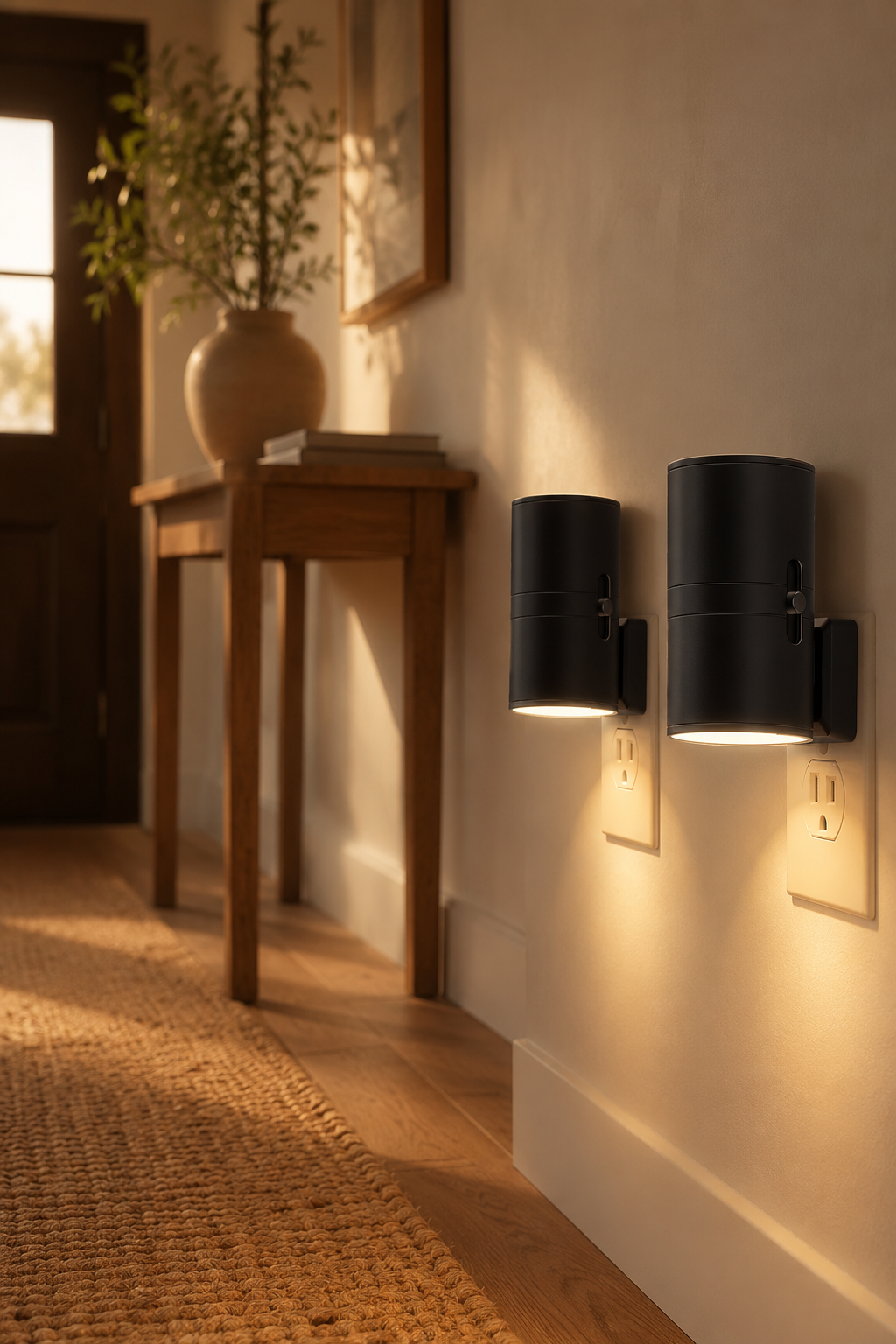
Winter in the northern hemisphere brings a dramatic shift in how we experience our homes. With sunset arriving as early as 4:30 PM and overcast grey skies dominating the midday hours, we spend the majority of our waking home hours under artificial illumination.
Yet in most homes, lighting is treated as a utilitarian afterthought: a single, high-output ceiling fixture that floods rooms with flat, clinical glare. During the cold months, this harsh lighting feels aggressive, accentuating dark window panes outside and leaving rooms feeling cold and emotionally draining.
The Danish design tradition—which has endured dark Nordic winters for centuries—treats light as a healing architectural material. Warm winter lighting ideas transform dark evenings from an endurance test into an anticipated nightly sanctuary. By replacing central glare with distributed pools of amber glow, your living room becomes an enveloping retreat of pure hygge.
Here is an architectural guide to illuminating your home during the darkest months of the year.
1. The Hygge Lighting Doctrine: Eliminate Bare Bulbs
The foundational principle of Scandinavian interior lighting is simple yet transformative: the human eye should never encounter an unshielded light bulb.
When a bare filament or exposed LED diode sits in your field of vision, the pupil contracts against the glare, making the surrounding room appear darker by contrast.
To create true hygge:
- Diffused Linen Shades: Choose conical or drum shades made of unbleached natural linen or cotton that diffuse light softly both upward and downward.
- Opal & Frosted Glass Globes: Fixtures featuring milky opal glass scatter light in a continuous, 360-degree soft gradient with zero hotspots.
- Pleated Paper Pendants: Japanese rice paper lanterns (such as Noguchi Akari-style pendants) and Scandinavian folded paper shades cast an organic, cloud-like luminescence that softens hard drywall angles.
For holiday transitions and seasonal light pairing, review our principles in warm Christmas lighting ideas.
2. The 5-Point Perimeter Formula
Instead of illuminating the center of the room from above, construct a luminous perimeter. Placing light sources along the walls visually expands the room's boundaries while keeping the center seating area intimate and softly shadowed:
- North Corner (Floor Lamp): A 60-inch arched brass floor lamp with a pleated fabric shade positioned beside a reading chair, echoing layouts from cozy reading nook ideas.
- East Wall (Console Lamp): A substantial glazed ceramic table lamp on a low timber credenza, paired with styling from dark wood living room ideas.
- South Boundary (Hearth / Low Glow): A pair of glass hurricane lanterns holding real-wax flameless pillar candles resting directly on the floor.
- West Alcove (Floating Accent): A cordless rechargeable mini table lamp nestled on a floating open bookshelf.
- Architectural Backlight: A warm 2400K LED light bar tucked behind a tall floor-leaning mirror or large framed artwork.
| Light Layer | Fixture Type | Ideal Kelvin | Lumens per Fixture | Role in Room | | :--- | :--- | :--- | :--- | :--- | | High Ambient | Paper pendant / Uplight canister | 2700K | 600–800 lm | Bounces soft wash off ceiling | | Mid Task / Reading | Swing-arm brass sconce | 2700K (CRI 90+) | 450 lm | Focused reading clarity without glare | | Accent & Mood | Ceramic table lamp / Cordless | 2200K–2400K | 200–350 lm | Creates warm gathering pools | | Low Intimate | Beeswax tapers / Lanterns | 1800K–2200K | 50–100 lm | Primal flickering warmth at eye/table level |
3. The Dual-Kelvin Day-to-Night Transition
To thrive during long winters, your lighting should align with human circadian biology:
- The Daytime Focus Phase (9:00 AM – 3:30 PM): When winter skies are overcast, use a bright 4000K–5000K light therapy lamp (10,000 lux) during the morning to suppress melatonin, boost dopamine, and maintain focus.
- The Sunset Golden Transition (4:30 PM onward): The moment darkness falls outside, switch off all cool-spectrum lights. Transition your living space entirely to low-Kelvin amber lighting (2200K–2700K) to trigger natural relaxation and wind-down, as detailed in our guide to warm fall lighting ideas.
4. Cordless Accent Lamps: Lighting Awkward Nooks
Winter evenings are made cozier by placing light in unexpected micro-locations:
- Inside Dark Bookshelf Cubbies: A miniature brass touch lamp illuminates favorite book spines and ceramic treasures without running black cords across shelves.
- On Kitchen Butcher Blocks: A frosted mushroom lamp creates an inviting midnight water-glass station.
- On Window Sills: A low amber lamp catches falling snow or rain against the window glass, creating a serene threshold between cold nature and indoor warmth.
5. The Ritual of Open Flame: Pure Beeswax
Nothing replaces the emotional grounding of a living flame on a freezing January night:
- Light three pure beeswax taper candles at dinner. The golden flame burns cleanly with zero petroleum soot.
- Place tea lights inside fluted amber glass votive cups along the coffee table, letting the cut glass cast dancing honey-colored reflections across your rug.
Complete your whole-home winter sanctuary with our textile layering guide in how to layer a bed for winter, explore post-holiday living room styling in winter living room ideas, and cultivate a peaceful bedroom retreat with cozy winter bedroom ideas.
Frequently Asked Questions
What is the best light bulb color temperature for combating winter blues?
During daytime working hours (8:00 AM to 3:00 PM), use 5000K full-spectrum high-CRI light to support alertness and combat Seasonal Affective Disorder (SAD). After 4:30 PM sunset, switch immediately to 2200K–2700K warm amber illumination to signal melatonin production and create a soothing, anxiety-free evening environment.
What does the Danish concept of hygge lighting actually mean?
Danish hygge lighting centers on eliminating high-glare direct light sources. The rule is simple: the eye should never look directly at a bare light bulb. Light should always be diffused through paper, frosted glass, or natural fabric shades, and distributed in small, intimate pools of warmth across the perimeter of the room.
How many lamps should be in a living room during winter?
Aim for a minimum of 4 to 6 independent light sources in an average living room. This allows you to eliminate the overhead ceiling fixture entirely and construct layered illumination across high, eye-level, and floor planes.
Can you use uplighting in a residential living room?
Yes. Concealing a low-wattage warm LED uplight behind a large houseplant, an architectural column, or a standing room divider washes the wall and ceiling with indirect light, making low winter ceilings feel taller without harsh downlights.