When styling a kitchen, it is incredibly easy to focus all of your energy and budget on the major focal points: the pendant lighting over the island, the sprawling expanse of quartz countertops, or the carefully selected cabinet hardware. However, the true test of a kitchen’s functionality and its overall sense of calm is found in the hardest-working zones. Implementing thoughtful kitchen sink organization ideas is often the single most impactful micro-project you can tackle. A cluttered sink area, overflowing with soggy sponges, brightly colored plastic dish soap bottles, and haphazardly tossed scrub brushes, instantly detracts from even the most beautifully designed room. By contrast, a curated, tidy sink station elevates the entire kitchen, making daily chores feel less like a burden and more like a mindful ritual.
The key to achieving a serene, functional sink area is containment and intentionality. Instead of allowing cleaning tools to scatter across the counter, bringing them together into a single, well-designed home fundamentally changes the visual landscape. In my nine years of styling residential kitchens, I have consistently found that grouping these disparate items into a sleek, dedicated organizer is the fastest way to restore order. When every tool has a specific place, the counter remains clear, and the aesthetic immediately shifts from chaotic to intentionally minimal.
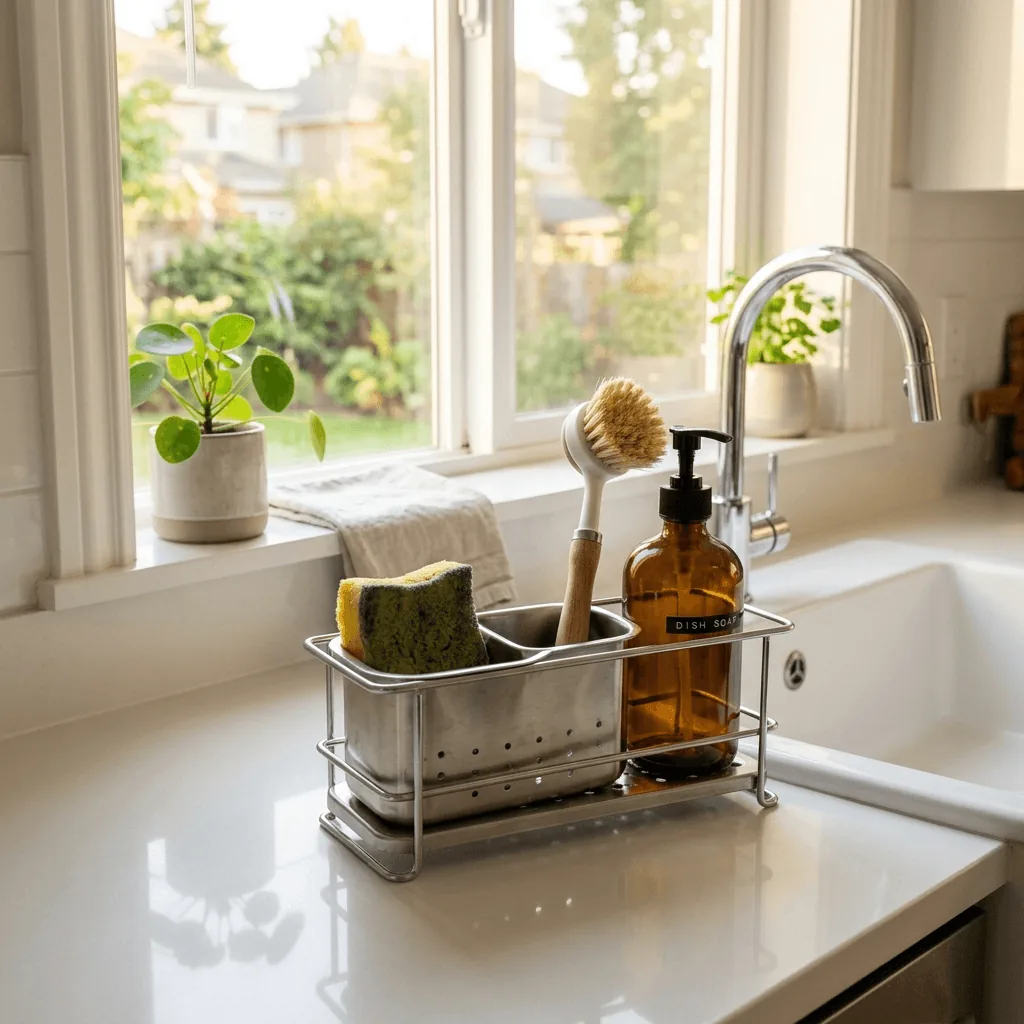
Stainless Steel Kitchen Sink Caddy
Create a calm, clutter-free kitchen sink with a sleek stainless steel caddy that holds your sponge, brush, and soap dispenser in one tidy spot. Perfect for small kitchens, renter-friendly setups, and anyone chasing that warm minimalist counter aesthetic.
Why kitchen sink organization matters for a calm home
The kitchen sink is the undisputed command center of the home. It is where you wash produce in the morning, where you rinse coffee mugs throughout the day, and where you tackle the inevitable aftermath of dinner. Because it sees such heavy, continuous use, it is a natural magnet for clutter. When this area becomes chaotic, that sense of disorder subtly radiates throughout the rest of the room. It is difficult to feel relaxed in a space when the first thing you see upon entering is a pile of damp, mismatched cleaning supplies.
Effective kitchen sink organization matters because it addresses both visual noise and practical hygiene. Visually, a contained sink station reduces the number of distinct objects the eye has to process. Instead of seeing a sponge, a brush, a soap bottle, and a drain stopper as separate, competing elements, the eye perceives them as a single, unified collection. This concept of “chunking” is a foundational principle of minimalist design.
Practically, proper organization extends the life of your cleaning tools and protects your countertops. Sponges that are left flat on the counter stay damp, creating a breeding ground for bacteria and unpleasant odors. Constant moisture trapped under a wet soap bottle can also degrade the caulking around your sink or leave stubborn hard water rings on natural stone surfaces. A dedicated organizer elevates these items, promoting essential airflow and catching drips before they can cause damage.
Essential elements of kitchen sink organization
Creating a highly functional and beautiful sink station does not require a dozen different gadgets. In fact, the most successful setups are aggressively edited. To achieve a warm, modern aesthetic that actually functions for a busy household, you only need to focus on a few essential elements.
First, consider your soap dispenser. The most immediate upgrade you can make to your kitchen sink organization is to decant your dish soap and hand soap. Store-bought plastic bottles are designed to grab your attention on a supermarket shelf with loud colors and bold typography; they are not designed to blend seamlessly into your calming home decor. Transferring these liquids into simple, elegant dispensers—perhaps a matte black glass bottle or a warm amber pump—instantly elevates the area.
Second, evaluate your scrubbing tools. If you are using neon green sponges or brightly colored plastic dish brushes, they will fight against a neutral, calming design scheme. Opt for natural materials where possible, such as a wooden dish brush with tampico bristles, or a cellulose sponge in a muted, earthy tone. These small material swaps make a significant difference in how the space feels. For further inspiration on incorporating natural materials, exploring acacia wood kitchen utensil sets can offer ideas for bringing warmth to your countertops.
Finally, you need the anchor: the caddy itself. The caddy is what holds the entire vignette together. It needs to be robust enough to withstand constant exposure to water, yet refined enough to sit proudly on your counter. This is where a high-quality stainless steel caddy truly shines, offering both durability and a clean, architectural line.
Sizing and placing your stainless steel sink caddy
When selecting a sink caddy, scale and proportion are just as important as they are when choosing a living room sofa. A caddy that is too small will inevitably overflow, defeating its purpose, while one that is too large will unnecessarily encroach on your valuable counter real estate.
Before making a selection, take precise measurements of the area between your sink basin and the wall or backsplash. Standard kitchen counters offer roughly 3 to 4 inches of clearance behind the sink, though this can vary wildly in older homes or apartments. You need a caddy that fits comfortably within this footprint without overhanging the sink edge or pressing awkwardly against the backsplash.
A well-designed stainless steel caddy typically measures around 7 to 9 inches in length and 3.5 to 5 inches in depth. This footprint is highly efficient. It provides enough horizontal space to accommodate a standard soap dispenser, a hand soap pump, and a dedicated slot for a dish brush, while leaving a front section open for a sponge to rest and dry.
Placement is also crucial for both ergonomics and aesthetics. If you are right-handed, placing the caddy on the right side of the faucet is generally the most intuitive setup, allowing you to reach for soap or the sponge without crossing your body. However, if your sink is situated in a corner or if you have a particularly beautiful wireless cabinet lighting setup illuminating a specific side of the counter, you may choose to position the caddy where it looks most balanced visually. The goal is to ensure it feels intentionally placed rather than randomly deposited.
Pairing sink accessories for a cohesive look
The magic of interior styling lies in the details, and the kitchen sink is no exception. Once you have your stainless steel caddy in place, the accessories you pair it with will dictate the overall vibe of the space. The contrast between the cool, reflective surface of the stainless steel and the surrounding materials is an opportunity to introduce warmth and texture.
To soften the industrial edge of the steel, introduce organic elements. A small, potted pothos plant or a delicate trailing ivy placed near the sink brings immediate life and vibrant color to the hard surfaces of the kitchen. The greenery contrasts beautifully with the silver tones of the caddy and softens the hard right angles of the countertop.
When choosing the soap dispensers that will sit inside your caddy, consider the finish of your kitchen faucet. If you have a brushed nickel or stainless steel faucet, matching the pumps on your soap dispensers creates a highly cohesive, integrated look. If your faucet is matte black or warm brass, choosing soap dispensers with matching black or brass pumps introduces a subtle repetition of materials that feels incredibly bespoke and considered.
Do not underestimate the impact of your kitchen towels. The towel draped over the oven handle or folded neatly next to the sink is a vital part of the sink station’s visual story. Swap out heavily patterned or novelty towels for high-quality, textured linens. A waffle-weave towel in a soft oat, charcoal, or muted sage green perfectly complements a minimalist stainless steel caddy, adding necessary softness and tactile interest without reintroducing visual clutter.
Maintenance and cleaning for your sink station
Even the most beautiful organizational system will fail if it becomes difficult to maintain. A sink caddy, by its very nature, is subjected to a constant barrage of water, soap scum, and food particles. Establishing a simple, realistic maintenance routine is the only way to ensure your kitchen sink organization remains a point of pride rather than a source of frustration.
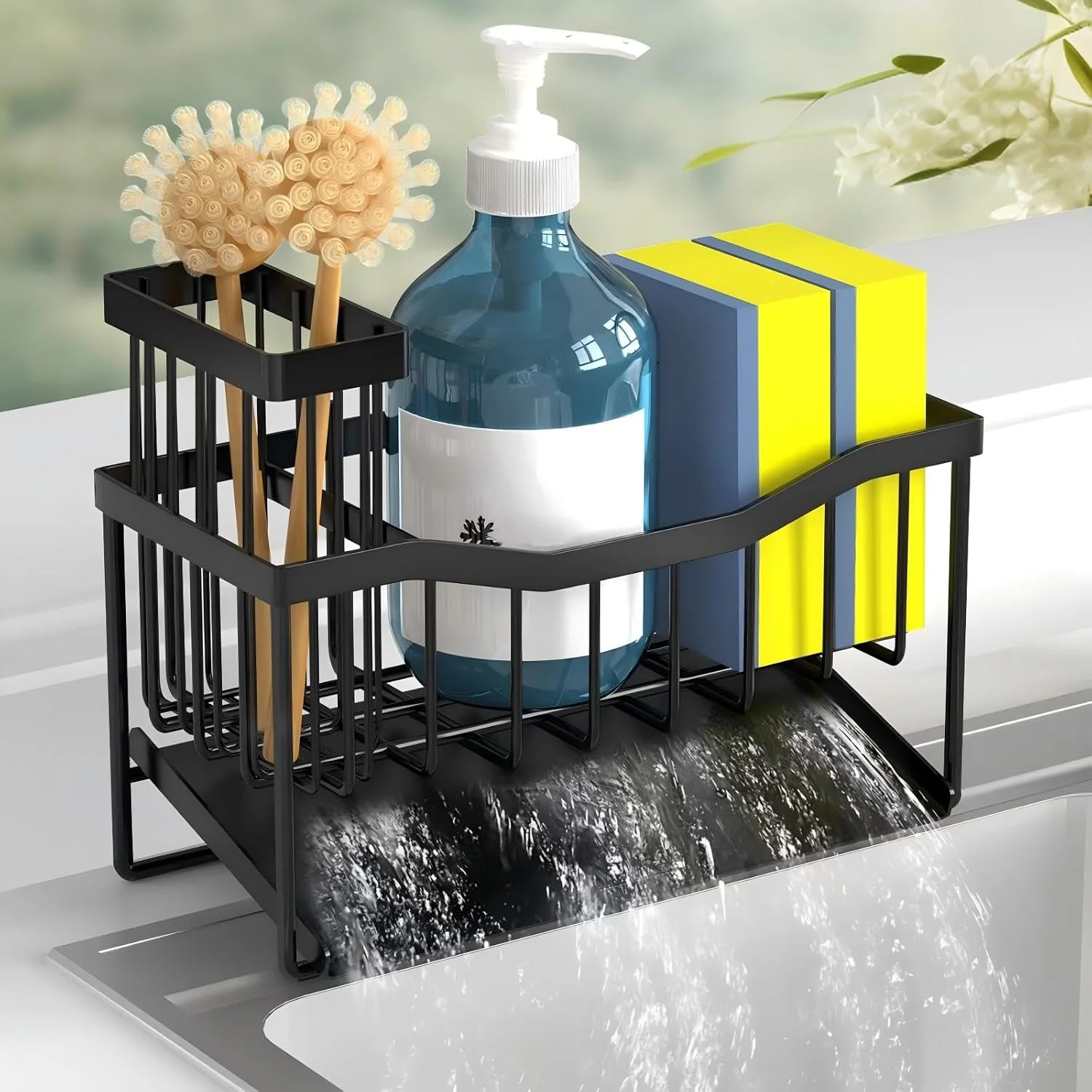
The primary enemy of a clean sink station is standing water. When water is allowed to pool in the bottom of a caddy or on the counter beneath it, it quickly breeds mildew and leaves stubborn hard water stains. This is why choosing a caddy with a highly effective drainage system is paramount. The best models feature a sloped drip tray that directs water back into the sink, or a removable base pan that catches drips and can be easily emptied.
Make it a habit to quickly wipe down the stainless steel caddy with a microfiber cloth at the end of each day when you wipe down your counters. This takes mere seconds but prevents water spots from setting in and dulling the finish. Once a week, remove all the items from the caddy and give it a thorough cleaning. Most high-quality stainless steel caddies are dishwasher safe, which makes deep cleaning effortless. If you prefer to wash by hand, use warm, soapy water and a soft cloth—never use abrasive scouring pads, which will scratch the surface and invite rust.
Pay attention to the bottom of your soap dispensers as well. Soap can easily drip down the sides of the bottle and congeal at the base, sticking to the inside of the caddy. Wiping the bottoms of the bottles during your weekly deep clean ensures that the entire system remains hygienic and visually immaculate.
Renter-friendly kitchen sink organization tips
For those living in rental properties, achieving a beautiful kitchen can sometimes feel like an uphill battle against dated countertops, shallow sinks, and restrictive leases. However, the sink station is one area where you have total control, making it a prime target for a renter-friendly aesthetic upgrade.
Because you cannot simply replace an ugly faucet or install an under-mount sink, your organizational tools must work twice as hard to distract the eye and elevate the space. A high-quality stainless steel caddy is an excellent investment for a renter because it requires no installation, leaves no damage, and can easily travel with you to your next home.
If counter space is exceptionally tight in your apartment, look for vertical solutions. A caddy that utilizes vertical space for brushes rather than laying them flat saves crucial square inches. Alternatively, explore over-the-faucet caddies. These models loop directly over the neck of the faucet, suspending your sponge and brush over the basin itself. While slightly more utilitarian in appearance, they are incredibly effective at keeping the counter entirely clear, which is a massive victory in a tiny kitchen.
You can also use a beautiful tray to define the sink zone. Placing your stainless steel caddy, a nice hand lotion, and a small plant on top of a marble or sealed wood tray creates a deliberate “moment” on the counter. The tray acts as a visual boundary, signaling that this is a curated collection rather than random clutter, effectively elevating even the most basic laminate countertop.
Frequently Asked Questions
What is the best way to organize a kitchen sink area?
The best way to organize a kitchen sink area is to minimize visual clutter by grouping essential items like sponges, soap dispensers, and brushes into a single, contained unit, such as a stainless steel sink caddy. This keeps wet items off the countertop, preventing water damage and creating a clean, cohesive look.
Does a stainless steel sink caddy rust over time?
High-quality 304 stainless steel sink caddies are highly rust-resistant, but standing water or harsh chemical cleaners can eventually cause spotting or surface rust. To maintain the finish, regularly wipe down the caddy and ensure the drip tray is emptied and cleaned weekly to prevent mineral buildup.
How can I maximize space around a small kitchen sink?
Maximize space around a small kitchen sink by utilizing vertical space and multi-functional accessories. Choose a compact sink caddy that holds your soap, sponge, and brush vertically. Consider an over-the-sink drying rack or wall-mounted soap dispensers to keep the immediate counter area completely clear.
Are silicone sink trays better than stainless steel caddies?
Silicone trays are excellent for preventing slips and are easy to throw in the dishwasher, but they often allow water to pool around your sponge, which can lead to odors. A stainless steel caddy with a sloped or removable drip tray provides better airflow for sponges to dry quickly and offers a more structured, elevated aesthetic.